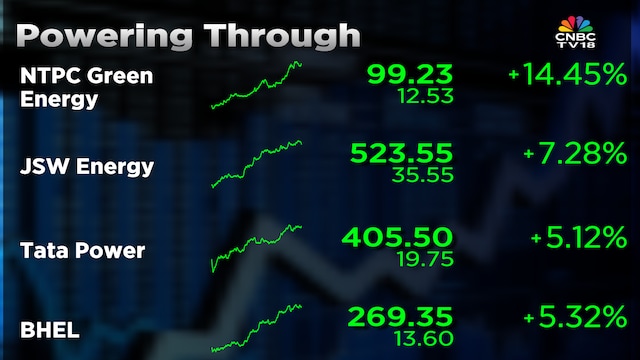

The brokerage said power demand remained relatively muted in FY26 due to a subdued summer and an unusually strong winter, which reduced electricity consumption during peak months.
However, early trends in FY27 indicate a reversal. Temperatures have already risen, with several parts of the country facing heatwave conditions, pointing to a potential surge in electricity demand in the coming months.
At the same time, risks are emerging on the supply side. Morgan Stanley flagged the possibility of lower generation from gas and hydro power sources during the first half of FY27.
The brokerage said that persistent tensions in the Middle East could tighten global gas supplies, potentially affecting LNG availability for India.
Separately, reports suggest that the Himalayan region may witness one of its driest spring seasons on record, which could weigh on hydroelectric output.
Gas and hydro power together accounted for around 2% and 9% of India’s total power generation respectively in FY26.
In this backdrop, Morgan Stanley expects thermal coal-based generation to shoulder a larger share of incremental demand. The shift could also lead to higher solar curtailment in certain regions, allowing thermal plants to ramp up output more smoothly.
Among stocks, the brokerage said stronger merchant power prices could benefit companies such as Adani Power and JSW Energy through improved earnings.
It added that a settlement related to the Mundra project or the imposition of Section 11 of the Electricity Act could act as a positive trigger for Tata Power.
Torrent Power could also see gains from merchant gas sales where access to physical cargoes exists.
Meanwhile, Morgan Stanley said NTPC could see a re-rating in its price-to-book multiple if peak power deficits intensify.