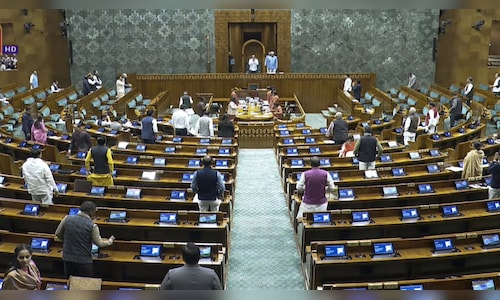

The Lok Sabha on Thursday passed the Industrial Relations Code (Amendment) Bill, 2026, which seeks to amend the Industrial Relations Code, 2020, to remove any scope for future legal ambiguity.
The amendment aims to clarify the continuity and repeal of three labour laws that were subsumed under the 2020 Code — the Trade Unions Act, 1926, the Industrial Employment (Standing Orders) Act, 1946, and the Industrial Disputes Act, 1947 — governing trade unions, industrial employment and industrial disputes.
While these laws already stand repealed under Section 104 of the Industrial Relations Code, the government said the amendment was necessary to prevent any confusion arising from a mistaken interpretation that the power to repeal had been delegated to the executive. Union Labour and Employment Minister Mansukh Mandaviya moved the Bill in the House.
Also Read: Opposition submits notice for Lok Sabha Speaker’s removal: Procedure explained
During the debate, Congress MP Kodikunnil Suresh said the amendment did not amount to a reform, alleging that the government was weakening employment protection at a time when youth unemployment remains high.
BJP MP Darshan Singh Chaudhary countered that the Bill would safeguard workers’ interests while facilitating ease of doing business for industries.
The Lok Sabha was adjourned minutes after proceedings began for the day amid protests by Opposition members and reconvened at noon.
As Leader of the Opposition, Rahul Gandhi launched a sharp attack on the government over the interim trade agreement with the United States, with the House also witnessing a brief light-hearted exchange between the Congress leader and the Chair, Jagdambika Pal.