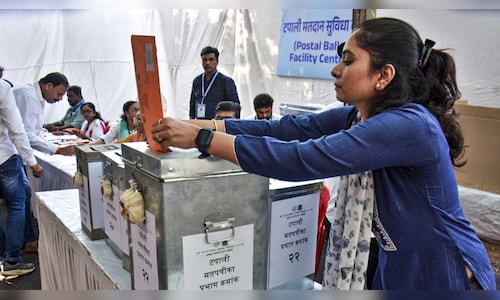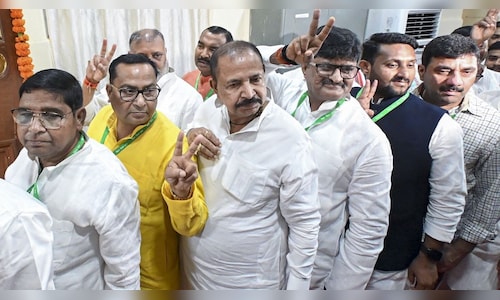

The biennial elections are scheduled because the tenure of 37 Rajya Sabha members from ten states is set to expire in April, vacating the seats for new members to be elected.
Of the 37 seats, 26 candidates were elected unopposed. Voting is now underway for the remaining 11 seats – five from Bihar, four from Odisha and two from Haryana.
What is cross-voting in Rajya Sabha elections
Cross-voting in Rajya Sabha elections refers to when a Member of Legislative Assembly (MLA) votes for a candidate from a different party, contrary to their own party’s directive or candidate preferences.
It is common in systems that use secret ballots, allowing people to vote based on their own preferences rather than the party line. This behaviour can have serious consequences for party unity, electoral outcomes, and the dynamics of political coalitions.
This can happen due to various reasons, such as personal beliefs, local issues, political strategy or personal ambitions.
How are Rajya Sabha elections held?
According to Article 80 of the Constitution, each state’s Rajya Sabha MPs are indirectly elected by elected members of their Legislative Assembly. Rajya Sabha elections will be held only if the number of candidates exceeds the number of vacancies.
In fact, until 1998, the outcome of Rajya Sabha elections was almost always certain.
Previously, candidates nominated by various parties based on their strength in the Assembly were elected unchallenged. However, in the June 1998 Rajya Sabha elections in Maharashtra, cross-voting resulted in the defeat of a Congress candidate.
In order to prevent MLAs from cross-voting, an amendment to the Representation of the People Act, 1951, was implemented in 2003. Section 59 of the Act was changed to require that votes in Rajya Sabha elections be cast using an open ballot.
MLAs from political parties must show their ballot papers to their party’s authorised agent. The vote will be invalid if the ballot paper is not shown to the approved agent or anybody else. Independent MLAs are barred from showing their ballots to anyone.
The Tenth Schedule and Rajya Sabha elections
The Tenth Schedule, introduced in 1985, outlines the anti-defection law, which disqualifies members of Parliament or State legislatures who voluntarily give up party membership or vote against party instructions.
However, this doesn’t apply to Rajya Sabha elections, as clarified by the Election Commission in 2017. In these elections, parties can’t issue whips to their members, and voting against party lines doesn’t attract disqualification under the Tenth Schedule.
Court Rulings
The Supreme Court upheld the open ballot system for Rajya Sabha elections in Kuldip Nayar versus Union of India (2006), citing transparency as a means to combat corruption. However, the court also ruled that MLAs voting against their party won’t face disqualification under the Tenth Schedule, but may face party disciplinary action.
In Ravi S.Naik and Sanjay Bandekar versus Union of India (1994), the court broadened the definition of voluntarily giving up membership to include conduct beyond formal resignation.