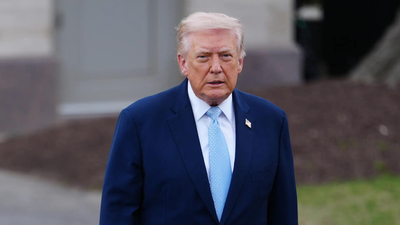


Three weeks into a military campaign against Iran, US President Trump is facing growing scrutiny from Congress. While the Pentagon is requesting an additional $200 billion to fund operations, lawmakers from both parties are pressing for a clearly defined strategy. With 13 US service members killed and the President claiming he will know the war is over when he “feels it in his bones,” pressure is mounting on the White House to outline its objectives before legal and financial support wanes.
“The real question is: What are we ultimately trying to accomplish?” Senator Thom Tillis, R-N.C., told AP. “I generally support anything that takes out the mullahs. But there has to be a strategic articulation of our objectives.”Trump said Friday that he is considering “winding down” operations even as new goals are outlined. Congress, largely Republican-controlled, has so far avoided directly challenging Trump. Under the War Powers Act, the president may conduct military action for up to 60 days without congressional approval. Republican lawmakers have voted down several Democratic resolutions aimed at halting the campaign.Some lawmakers were alarmed by Trump’s remark that the war will end “when I feel it in my bones.” “When he feels it in his bones? That’s crazy,” said Virginia Sen. Mark Warner, the top Democrat on the Senate Intelligence Committee.“Regime change? Not likely. Eliminating enriched uranium? Not without boots on the ground,” Warner said. “Before taking on a war of choice, the president should make the goals clear to the American people.”Senate Democratic leader Chuck Schumer called it “preposterous,” while Senator Mazie Hirono, D-Hawaii, urged prioritizing domestic programs like Medicaid and SNAP.Tillis noted that the president’s latitude under the War Powers Act is limited. “When you get into the 45-day mark, you need to either seek authorization for continued military force or present a clear exit strategy. Those are the options the administration must consider,” he said.House Speaker Mike Johnson, R-La., insisted that the original mission is largely complete. “We were trying to take out ballistic missiles, disrupt their production, and neutralize the navy, and those objectives have been met,” he said. Johnson added that Iran’s continuing threat in the Strait of Hormuz is “dragging it out a little bit.”President Donald Trump and his administration have so far offered mixed messages and contradictory explanations on the joint US-Israeli military campaign against Iran.“I have a plan for everything, OK?” he told a reporter from the New York Post when asked about spiking oil prices. “I have a plan for everything. You’ll be very happy.”When asked whether the operation could therefore end soon, Trump said: “I don’t know, it depends. Wrapping up is all in my mind, nobody else’s.”Later, however, Trump was walking back those comments.“We could call it a tremendous success right now,” he said. “Or we could go further. And we’re going to go further.”He said the US was “very close to finishing” what he called an “excursion”, but warned that the US would intensify its strikes if Iran continued to threaten oil tankers exiting the Persian Gulf.“We will hit them so hard that it will not be possible for them or anybody else helping them to recover that section of the world,” he said.