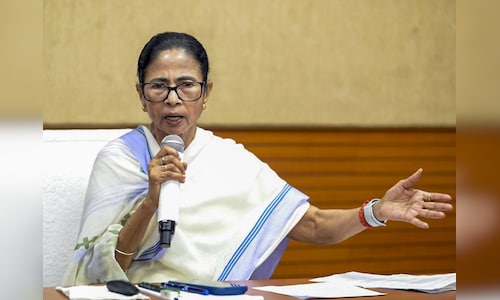

To date, a few political analysts have dared to give a clear edge to the BJP in Bengal. While the party seems poised to retain Assam and hopes for a turnaround in Tamil Nadu through its alliance with the AIADMK — keeping a close eye on Tamil superstar Vijay — the story in West Bengal is distinct. Chief Minister Mamata Banerjee maintains a tight grip over both the administration and her party cadre, controlling a machinery that often exerts influence at the booth level. By taking the Enforcement Directorate head-on, Banerjee has sent a message to her supporters that she is still leading from the streets, a move that has galvanised her base. In the Presidency area of the Kolkata region, she retains firm support among the Bengali intellectual class, the Bhadralok. While she has played the card of minority appeasement effectively, the fear of a Hindu backlash recently forced her to announce remuneration for both temple priests and Madrasa imams.
BJP confident of increasing its tally
In the 2021 assembly polls, the BJP won 77 seats. Prior to that, in the 2018 Lok Sabha elections, the party secured 18 seats, though that number dipped to 10 in the 2024 Lok Sabha polls. However, to the surprise of many in Bengal, the BJP’s vote percentage actually increased in 2024. The votes polled in the BJP’s favour during the Lok Sabha elections gave it a lead in 90 Assembly segments. The BJP has now calculated that, in addition to these 90 seats, it is likely to pick up around 16 seats in the Kolkata area — a region where the TMC swept all 36 seats last time. The BJP strategy team is firmly convinced that the people of the state have made up their minds to vote against the “misrule” of Mamata Banerjee, drawing parallels to 2011 when the CPM led by Buddhadeb Bhattacharjee was ousted.
Regarding leadership, there are strong indications from the BJP high command that Suvendu Adhikari is the state’s natural leader. Having defeated Mamata Banerjee in Nandigram in the last election, Adhikari is now taking her on again from the Bhabanipur assembly seat. This has effectively put the leadership issue to rest and made the BJP confident that the TMC is losing the narrative plot.
The minority factor
The BJP top brass is aware that over 50 seats in the state have a Muslim population exceeding 50%. Consequently, the TMC effectively begins the election with a 50-seat advantage, while the BJP starts from scratch. However, heavy polarisation in these areas may unite Hindu voters in favour of the BJP, while minority votes could partially shift towards the Congress or the Left in certain pockets.
The BJP believes there has been a significant dent in Banerjee’s minority vote bank. Despite many tall promises, several key issues have disappointed this core constituency. For instance, while Banerjee promised she would not allow the CAA-NRC process, the Election Commission successfully moved forward with its requirements. Similarly, the passage of the Waqf Bill and the abolition of Triple Talaq by Parliament — despite her vocal opposition — have been viewed as jolts to her minority voters. BJP sources admit this does not necessarily mean minorities will vote for the saffron front, but these factors may cause a partial shift towards the Congress or Left parties.
Strategists expect the Congress to win at least eight seats in Muslim-dominated areas, while Humayun Kabir of Furfura Sharif is expected to secure at least three. Regions bordering Kishanganj and Bihar, specifically the Malda and Dinajpur districts, remain heavily polarised.
Caste-based polarisation
It was long argued that caste plays no role in Bengal elections and that minority appeasement was the only dominant theme under both the Left and the TMC. However, BJP sources point out that Banerjee’s decision to announce state commissions for four specific castes suggests a state of panic. The BJP has identified the Mahtos (Kurmis) as a major demographic in Bardhaman, Jhargram, Medinipur, and districts bordering Jharkhand. Representing 5% of the total population, they influence more than 20 seats across six districts.