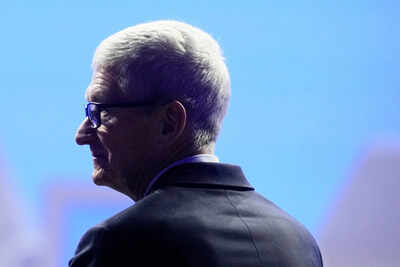


Tim Cook isn’t going anywhere just yet—he said so himself on Good Morning America last week. But Apple is quietly, and very deliberately, preparing for the day he does leave. And if you ask the people who work closest to him, there’s one name that keeps coming up: John Ternus.Ternus, 50, is Apple’s Senior Vice President for Hardware Engineering. He oversees the products that bring in roughly 80% of Apple’s revenue. According to a Bloomberg report, current and former colleagues describe him as “well-liked” among Apple’s senior leadership, with multiple members of Cook’s team having already acknowledged he’s the most likely next boss.That’s a notable degree of internal consensus for a company that rarely telegraphs anything.
John Ternus has been running the show longer than one thinks
The public got a small preview of what a Ternus-led Apple might look like earlier this month. When Apple held its MacBook Neo launch event in New York on March 4, it was Ternus—not Cook—who did the big reveal on stage. The next morning, he appeared on Good Morning America to talk up the $599 laptop. Cook typically handles those appearances himself.It wasn’t a one-off. Bloomberg reports that Ternus has been steadily accumulating responsibility across Apple’s organisation. He now oversees hardware and software design teams, making him the key bridge between Apple’s design organisation and senior management. Last year, he also took control of a secretive robotics unit working on a tabletop device with a swiveling screen built for FaceTime calls.
A “real engineer” who likes to drill into the details, even in meetings
Colleagues describe Ternus as highly technical—someone who drills into tiny details during internal meetings and believes Apple’s culture is built on hiring engineers who push past the boundaries they’re given. That’s a meaningfully different profile from Cook, who Bloomberg notes doesn’t participate in product development at all, focusing instead on supply chains, strategy, and financials.Ternus came up through the product development ranks. He cut his teeth on computer monitors, oversaw hardware for the original iPad, and eventually took charge of the Mac before landing the top hardware engineering role in 2021. He knows how things get built because he’s spent decades building them.That hands-on background has had real consequences for Apple’s products. Bloomberg reports that since taking over hardware engineering, Ternus has reversed a trend of declining product quality—one that crept in when the company prioritised thinness and sleekness over performance. Tony Blevins, Apple’s procurement chief until 2022, calls him “a very meticulous engineer and a judicious executive,” and describes him as an “outstanding and obvious choice” to succeed Cook.His partnership with Craig Federighi, Apple’s software engineering chief, has also been a quiet but significant asset. The two worked closely together to transition the Mac from Intel chips to Apple’s own processors—a technically complex, high-stakes move that went remarkably smoothly. Ternus also pushed Federighi internally to build a proper iPadOS, arguing that the iPad’s hardware was being held back by running the same software platform as the iPhone.One longtime Apple executive who has worked with all three—Jobs, Cook, and Ternus—put it plainly to Bloomberg: “If you think Tim Cook’s doing a good job, then you’ll think John Ternus is going to do a good job.”
Apple’s AI problem could define who gets the top job
Apple Intelligence was widely panned after its 2024 launch. A more capable Siri has been delayed multiple times and will, somewhat embarrassingly, depend on Google’s technology when it does arrive. The most exciting AI features on Apple devices right now are coming from apps built by OpenAI, Anthropic, and Google—not Apple itself.That’s the inheritance waiting for whoever follows Cook. And it’s why some inside and outside the company question whether Ternus—a hardware-first executive—is the right fit for a moment that may demand a software and services leader. Bloomberg notes that his case is strongest if Apple intends to stay a hardware company. If the strategy shifts toward cloud, software, and AI services, his résumé becomes a harder sell.Ternus himself laughed off concerns about Apple being late to generative AI during a 2023 TV interview. That hasn’t aged well. To his credit, he’s now leading development of AI-powered home devices and camera-equipped wearables—bets that could play to Apple’s hardware strengths. But they’re still unreleased. He hasn’t yet proven he can shepherd a genuinely new product category to market, and in the AI race, time is not on Apple’s side.Cook, meanwhile, told Good Morning America he “can’t imagine life without Apple.” So Ternus, or whoever is next in line, may have a little more time to wait.