
The National Democratic Alliance, led by Bharatiya Janata Party (BJP), is likely to secure 1-3 seats, with other parties and undecided votes accounting for the remainder. Vote share is nearly tied, with UDF at 36.6%, LDF at 36.5%, NDA at 14.9%, and others or undecided at 11%.
This is the first tracker of the broader opinion poll, with the full survey set to be released on April 6.
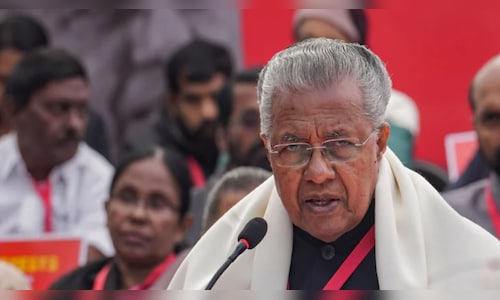
The preferred next Chief Minister is closely contested between VD Satheeshan (Congress) and Pinarayi Vijayan (CPM), both near 29%, followed by Rajeev Chandra Sekhar (BJP) at 10.8% and KK Shailaja (CPM) at 9.3%. Shashi Tharoor (Congress) polls at 8.4%. Muslim voters favour Satheeshan at 39.3%, while Christians favour Pinarayi at 36.6%.
Also Read: West Bengal poll: Mamata Banerjee’s TMC set for another term; BJP narrows gap
When asked to rate the overall performance of the state government over the past five years, 38.8% of respondents rated it “very good” or “good,” while 43.1% rated it “poor” or “very poor.”
Rural voters were more critical at 50.9%, compared with 40.5% in urban areas. Young voters aged 18-24 were relatively more satisfied, while the 35-44 age group expressed the highest dissatisfaction. Christian and Muslim communities were among the most critical.
Congress faces challenges in Kerala due to infighting and factionalism (45.5%) and high dependence on IUML (9.8%). The BJP’s barriers include misunderstanding Kerala’s history and people (30.9%) and CPM being perceived as a “Hindu party” (19.8%). Christians and voters aged 35-44 cite the BJP’s cultural disconnect (37%).
Also Read: Assam Opinion Poll: NDA set to retain power with 80-90 seats; Sarma leads CM race
Zone-wise, UDF leads in the north, LDF in the central and south zones, with both fronts evenly matched statewide. The combined leadership rating for UDF leaders is 45%, while LDF’s is 39%. Anti-incumbency against LDF is present but divided between NDA and UDF candidates.
Price rise is the most important issue for voters at 19.7%, followed by corruption at 14.4% and unemployment at 15.6%. Alcoholism and drug abuse are a concern for 12.7% of respondents, while communal polarisation is higher among Muslims (8.7%) and the 35–44 age group (9%).