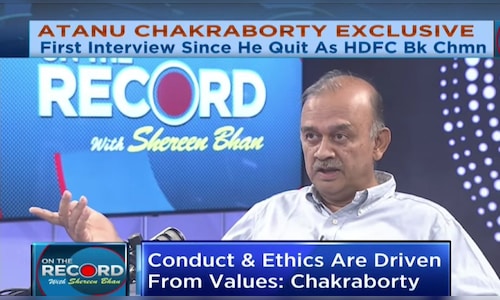

Twelve days after his sudden resignation, former HDFC Bank chairman Atanu Chakraborty said his decision to step down was driven by concerns around “values” and “ethics”, even as he stopped short of detailing specific triggers.
In a CNBC-TV18 exclusive, Chakraborty addressed key issues including the AT-1 bond episode, governance processes and the market reaction to his exit.
Here are the top takeaways:
1) AT-1 issue central to concerns: Chakraborty flagged the AT-1 bonds episode as the only grievance he publicly named, pointing to customer onboarding and conduct issues at the Dubai branch dating back to 2018. He questioned the bank’s characterisation of the matter as a “technical lapse”.
2) ‘8 years, then action’ criticism: He said the issues persisted for years before action was taken: “Something goes on for eight years and suddenly we take an action… I feel these conduct issues should not arise in the first place.”
He described this as reactive, not preventive governance.
3) No allegations, only ethical divergence: Chakraborty clarified he did not accuse individuals of wrongdoing, saying the divergence was in ethical standards: “I never said anyone was right or wrong… people need to read the dictionary.”
4) Denies opposing CEO reappointment:
Rejecting reports around Sashidhar Jagdishan’s reappointment, he said due process had not even begun: “Something which was not even discussed—how could differences be there?”
5) On HDB–MUFG deal speculation: He dismissed claims of discord, stressing limited chairperson authority: “No paper comes to the chairperson… he or she does not take any independent decisions.” He added his “blessings… do not matter” unless formally expressed in board discussions.
6) RBI engagement and bank’s position: Chakraborty confirmed informal discussions with the Reserve Bank of India but declined specifics. He said the bank remains “well capitalised and sound”, adding that “sound institutions must become even more sound.”
7) On performance and fiduciary duty: He linked concerns such as low CASA, a high cost-to-income ratio and stock underperformance to his fiduciary responsibility, rejecting the view that the merger alone explains the trends.
8) On share price fall post exit: He attributed the sharp fall largely to global factors: “The share price… had been falling for various reasons even before that.” He added that geopolitical tensions and a broader market sell-off played a key role, with his resignation “adding a little bit.”
9) On governance reviews by law firms: He underscored the limits of external reviews: “Lawyers can only tick compliance boxes… the board must do its own introspection.”
10) No regrets on resignation letter: Chakraborty said he stands by his resignation and its wording, calling the decision deeply personal and rooted in principle. He concluded that his dilemma was “internal and personal”, while emphasising that the board must reflect on governance practices, with all other issues remaining secondary.