
Behind this delay, however, lies a complex web of political calculations, legal hurdles, and administrative lapses that have impacted not only the political landscape but also grassroots development in the state.
Why local body elections have not happened in Maharashtra
The delay in conducting local body elections in Maharashtra, especially municipal corporations like Mumbai, Pune, Thane, and Nagpur, can be traced to a combination of legal ambiguities and political reluctance. A major turning point was the Supreme Court’s 2022 judgment that mandated the inclusion of OBC quota only after empirical data collection by the state. This forced the State Election Commission to pause elections until the Backward Class Commission submitted a comprehensive report.
However, even after the commission submitted its data, the polls were not held. Successive governments, first the Maha Vikas Aghadi (MVA) and now the Mahayuti coalition led by CM Devendra Fadnavis, Deputy CMs Eknath Shinde and Ajit Pawar, seemed hesitant to hold elections without clearly redrawing ward boundaries and finalising reservation rosters. For many observers, this reluctance is politically motivated — both alliances fear losing key municipal bodies, especially in urban areas where voter sentiments have shifted post the 2019 and 2024 Lok Sabha elections.
Impact on Maharashtra’s political landscape
The prolonged delay in local body elections has created a political vacuum at the grassroots level. Most of the municipal corporations and zilla parishads are currently being run by administrators, essentially bureaucrats, without any elected representatives. This has distanced people from their immediate political representatives and eroded accountability.
Politically, this has allowed all major parties — BJP, Shiv Sena (Shinde), NCP (Ajit Pawar), Shiv Sena (UBT), and Congress — to operate in a state of extended campaign mode. Parties have used this time to consolidate their voter bases, rework alliances, and shift narratives, particularly in the BMC where the battle between Shiv Sena (UBT) and Shinde Sena is seen as a prestige fight. The delay has especially benefitted ruling parties who, by avoiding elections, have dodged any immediate electoral backlash stemming from public grievances over governance, inflation, or civic issues.
Moreover, the political indecisiveness has also led to growing cynicism among voters. The perception that parties are avoiding elections to manipulate political outcomes damages the credibility of democratic institutions, making people feel that electoral processes are being subverted for power politics.
Impact on development and civic governance
Perhaps the most tangible fallout of the delayed elections is seen in day-to-day governance. With administrators at the helm, local bodies have turned into largely reactive entities. Major infrastructure decisions, budget approvals, and welfare schemes have slowed down. Projects that require political oversight and public feedback — be it road repairs, waste management, or urban development plans — are often stuck in limbo.
In a diverse state like Maharashtra, where rural and urban needs vary drastically, local self-governments are the first point of citizen interaction. Their dysfunctionality has meant delayed grievance redressal, lack of transparency in fund allocation, and weakened implementation of centrally and state-sponsored schemes like Smart Cities Mission, Swachh Bharat, and Jal Jeevan Yojana.
Why BMC elections are so crucial?
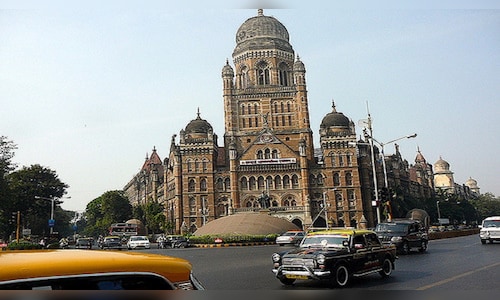
At the heart of this judicial push lies the BMC — Asia’s richest municipal corporation with an annual budget larger than some Indian states. Controlling the BMC is not just about civic administration; it is about political legitimacy and financial power. For decades, the BMC was Shiv Sena’s stronghold, serving as its core power base and funding source.
However, the 2022 split in Shiv Sena has completely changed the equation. The Uddhav Thackeray-led Shiv Sena (UBT) views the upcoming BMC polls as a make-or-break moment to reclaim its identity, while the Shinde-led faction wants to prove its political relevance in Mumbai. The BJP, meanwhile, eyes the BMC to expand its urban dominance and implement its “double-engine” governance model with both state and municipal cooperation.
Winning the BMC is also symbolically critical — it’s a litmus test for public opinion post the Maharashtra Assembly elections. As MVA opined Mahayuti won by tampering voting machines. It will signal whether Mumbaikars back the rebel Shinde faction or remain loyal to Uddhav Thackeray, and whether the BJP’s urban strategy is working for them to get them the throne of BMC for which it has been waiting quite a long time.
The Supreme Court’s directive is a timely reminder that democracy cannot be held hostage to political convenience or administrative delays. Local body elections form the bedrock of participatory governance and must be treated with the same urgency as state or national polls. Maharashtra, one of India’s most politically significant states, cannot afford to let its local institutions erode further. The ball is now in the State Election Commission’s court — and citizens must remain vigilant to ensure that this court order leads to meaningful democratic restoration on the ground.