
The law received assent from President Droupadi Murmu in September 2023.
What does the Act provide?
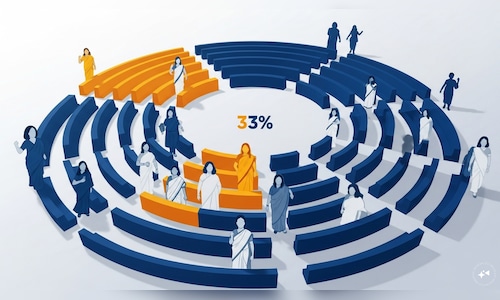
- One-third (33%) of seats in the Lok Sabha and state assemblies reserved for women
- Applies within SC/ST reserved seats
- Seats to be rotated after delimitation
- Why is implementation delayed?
Under current provisions, the reservation will take effect only after a delimitation exercise based on the next Census.
As reported by PTI, this could delay implementation until after the 2027 Census, pushing rollout to around 2034 if unchanged.
What is being proposed now?
The government is working on amendments to enable implementation before the 2029 general elections, with Parliament set to take up the issue during a special sitting from April 16-18.
According to PTI, the Union Cabinet chaired by Prime Minister Narendra Modi cleared draft amendment bills on April 8, paving the way for the law’s rollout ahead of the next Lok Sabha polls.
What has the Prime Minister said?
Prime Minister Narendra Modi has stepped up the push ahead of the special session, urging political consensus.
He told floor leaders that the “time has come to implement the Women’s Reservation Act in true spirit”, adding that a “historic discussion” on the law will take place in Parliament from April 16.
Modi said: “Any society progresses only when women have opportunity to progress, make decisions and more importantly, to lead.”
He stressed the broader national goal, saying: “For India to realise its vision of becoming a developed nation, it is essential women play a greater, active role in this journey.”
Reiterating the timeline, he said: “It is imperative that 2029 Lok Sabha, Assembly elections are conducted with women’s reservation in place.”
Calling for unity, the prime minister added: “I am writing this letter so that we may all come together in one voice to pass amendment to Women’s Reservation Act.”
Opposition response
Congress president Mallikarjun Kharge on Sunday wrote to the prime minister, objecting to the timing of the special Parliament session.
He said holding the session amid ongoing election campaigns in Tamil Nadu and West Bengal would be a “clear breach of the Model Code of Conduct.”
In his letter Kharge said: “The calling of a special sitting during the ongoing state elections only reinforces our belief that your government is hurrying the implementation of the bill to gain political mileage rather than truly empower women.”
Kharge reiterated the Opposition’s demand for an all-party meeting after April 29.