
“Our ministry’s work is to implement the words of Prime Minister Narendra Modi – “paani aur khoon saath nahi beh sakta“,” he said at the Powering Bharat Summit, organised by Network18 in collaboration with Moneycontrol, News18 India, and CNBC Awaaz.
India had suspended the Indus Water Treaty with Pakistan following the Pahalgam terror attack on April 22 which claimed 26 lives. The treaty was signed by Indian Prime Minister Jawaharlal Nehru and Pakistani President and Field Marshal Ayub Khan in 1960.
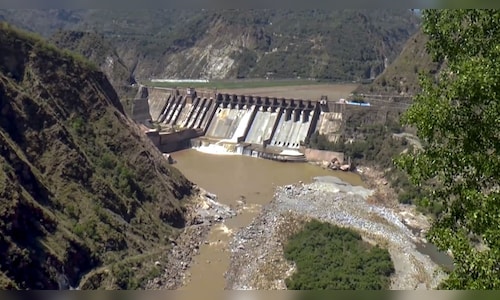
With no expiry date, the treaty states that water of the ‘eastern rivers’ (Beas, Ravi and Sutlej with 33 million acre-feet of water) would be ‘controlled’ by India while the ‘western rivers’ (Indus, Chenab and Jhelum with 80 million acre-feet) would be ‘controlled’ by Pakistan.
After the suspension of the treaty, he said the ministry has been working on better utilisation of rivers. “We are working to provide water to every village. For security, we have also started work on how to better utilise the rivers after the IWT was put on abeyance,” Patil said.
Waters from the three rivers are crucial for Pakistan’s agriculture (which accounts for 25% of the country’s gross domestic product) as well as energy needs. Hydropower accounted for 19% of the country’s energy production in 2023, according to Ember, a global thinktank.
The treaty also allows India to use the western rivers for power generation, navigation, floating of property, and fish culture without storing or diverting the flow in ways that scuttle access downstream in Pakistan.