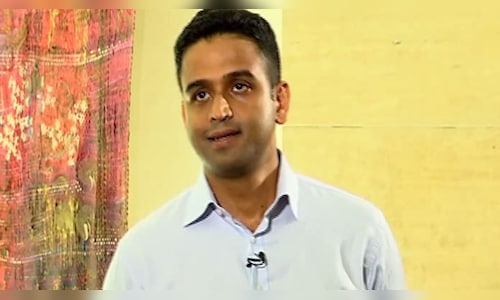

“The pace at which AI is compounding is ridiculous. We don’t know where the markets will be in 1–3 years. This uncertainty has to be factored into valuations, and it doesn’t seem to be,” Kamath told CNBC-TV18 ahead of the EY World Entrepreneur of the Year 2025 awards in Monaco, where he is representing India.
Despite regulatory challenges and market volatility, Kamath said Zerodha’s overall business remains resilient, though the broking vertical could see a 10–20% dip this year. “We’ll have done all right if we finish this year flat from the broking operations specifically. The overall business should still be all right,” he said. The company has leaned on its margin trading facility (MTF), which has grown to ₹3,000 crore since its launch in December and is expected to touch ₹10,000 crore by FY26-end.
Kamath ruled out any change in pricing strategy, despite increased compliance costs. “Brokerage rates, DP charges, those will remain unchanged. We haven’t changed them in the last 15–16 years. We want people to have predictability in pricing, and that’s a good thing,” he said.
Looking ahead, Kamath expects equity market participation in India to compound at around 15% annually. “We have 18 million customers, and around 9 to 9.5 million of them hold stocks. Of course, it won’t grow at the same speed we saw in the last four to five years, but long term, we hope to compound it at around 15%,” he added.
Zerodha, which started with limited capital and bootstrapped its way to becoming India’s largest online brokerage, is now investing in adjacent verticals like asset management, insurance and lending. Through its startup platform Rainmatter, it has backed over 120 startups. “Just like our own early years, these startups have distribution but still need time to build credibility. In 10 years, we hope to be a full-fledged financial conglomerate,” Kamath said, adding that a banking license could be part of that future.
Asked about a possible IPO, Kamath remained firm on staying private. “We already have enough cash to do whatever we want. Being listed is tough for a company like ours. What’s right for investors is not always what’s right for customers,” he said.
Below is the verbatim transcript of the interview.
Q: I imagine this is a different moment for you because you’re used to being awarded. But this is not just an award for Zerodha, it’s also Nithin Kamath of Zerodha competing for India on a global stage with 43 other entrepreneurs from around the world. Nithin, tell me how you’re feeling today.
Kamath: I feel good. Yesterday, we had one of those group discussions, and it felt like I was back in school or college. I haven’t done that in a while.
Q: But Nithin, part of the story you’re going to be sharing at the EY Entrepreneur of the Year awards is the Zerodha story, 15 years of building, the journey you’ve made, the impact you’ve created. As you look back at what you’ve achieved, could you highlight some key milestones? And more importantly, as you look at India today, what is Zerodha’s aspiration for the next 15 to 20 years?
Kamath: I’d say starting Zerodha itself was critical because there was very little money on the table. Then, in 2015, we launched our in-house product called Kite. In December 2015, we introduced zero brokerage for equity investing. The real tipping point came in 2016 when Aadhaar-based online onboarding started. And then, of course, in 2020, COVID brought us immense growth. Yes, there have been many tipping points in the journey. These were a few of them.
Q: Speaking of tipping points, you’ve been very transparent about the growth trajectory of both your business and the industry. The last time we spoke, you mentioned how seven regulatory changes would significantly impact both profits and revenue. Looking at FY24 numbers, profits up 62% at ₹4,700 crore, revenues exceeding ₹8,000 crore, what have you done to mitigate the regulatory risk? And what’s the actual impact of those changes today?
Kamath: We started our MTF (margin trading facility) business last December, and it’s grown significantly, around ₹3,000 crore in book size. That cushions some of the losses from the options trading business. That said, the hit is still there. I think we’ll have done all right if we finish this year flat from the broking operations specifically. The overall business should still be all right because we do some treasury operations as well. Until last December, it wasn’t bad at all. So overall, the business should be okay, but the broking business itself will probably be down 10–20%. That said, we’re also investing in other startups, like our insurance startup and AMC, so we just need to give them time to start contributing materially to revenue.
Q: You said broking might be down by 10–20%, but overall, you’re still hopeful this will be an “all right” year. Can you qualify what “all right” means, just to give us some context beyond that broking drop?
Kamath: We were kind of expecting the markets to go down, especially given what was happening in the first quarter of the year. But it now seems like that was a near-term bottom. The business has picked up because our performance is directly proportional to market activity. So, since markets are doing well, this year should be all right, not a dreadful one.
Q: You mentioned the MTF book has grown to ₹3,000 crore in just six months. Given the market behaviour, again, which has surprised even you, where do you see this book size going?
Kamath: I think we should reach around ₹10,000 crore by the end of the financial year. At ₹10,000 crore, we could potentially offset the impact of regulatory burdens, like transaction charges not being passed on to brokers and the drop in options trading volumes.
Q: But, you haven’t changed brokerage rates or DP charges. Is that because the margin trading business has helped cushion the blow? Do you expect the status quo to continue?
Kamath: Yes, for now, the status quo remains. When we launched MTF, the idea was to recoup the revenue outgo due to regulatory changes, and that’s happening. So, brokerage rates, DP charges, those will remain unchanged. We haven’t changed them in the last 15–16 years. We want people to have predictability in pricing, and that’s a good thing.
Q: From a broader Indian market perspective, you’ve highlighted big changes that have brought more investors in. Today, you have around 8 million active users. Given the diversification of India’s equity culture, what do you think participation could look like?
Kamath: We have 18 million customers, and around 9 to 9.5 million of them hold stocks in their demat accounts with us. We hope market participation will keep increasing over time. Of course, it won’t grow at the same speed we saw in the last four to five years. But long term, we hope to compound it at around 15% annually. That would be good, not just for us, but for the entire ecosystem.
Q: Do you believe it’s time to increase the LRS (Liberalised Remittance Scheme) limit of $250,000? Would that give Indians better investment diversification? Is that a change you would support?
Kamath: I don’t know if increasing the LRS limit would necessarily boost market participation. At $250,000, you’re targeting the top 0.5% of the population. Of course, we’d support any regulation that eases the process, especially removing the tax collected at source on remittances. But overall, I don’t see it materially increasing market participation.
Q: Let’s talk valuations. The debate never ends, are we pricey, are we cheap? Where do you stand right now?
Kamath: Given the uncertainty around developments like AI, I think we’re probably fairly valued across sectors. But that uncertainty doesn’t seem to be priced in yet.
Q: So, you’re saying the market isn’t factoring in uncertainty?
Kamath: Yes. I just tweeted about this, the pace at which AI is compounding is ridiculous. We don’t know where the markets will be in 1–3 years. So, this uncertainty has to be factored into valuations, and it doesn’t seem to be. Not just in India, but globally too, markets are taking things pretty easy.
Q: What’s next for Zerodha? You mentioned the AMC and insurance businesses. I know there’s still hope for a banking license. What could Zerodha look like over the next decade?
Kamath: Since we started Rainmatter in 2016, the idea has been to partner instead of building everything ourselves in adjacent areas. Rainmatter has almost 120–130 startups in the portfolio now. We’re doubling down wherever we see traction. Apart from insurance, which we’ve partnered with Ditto for, and AMC, which we’ve partnered with Smallcase for, our NBFC is in-house, we’re only doing loans against securities.
For many of these businesses, we’re still in the early 3–5 years. Just like our own early years, where we spent time proving ourselves, these startups have distribution but still need time to build credibility. In 10 years, we hope to be a full-fledged financial conglomerate. And yes, hopefully a banking license comes along the way.
Q: Let’s talk about your stake in the Metropolitan Stock Exchange. Do you believe there’s room for a new exchange between the NSE and BSE?
Kamath: I think there are segments, like debt, where both existing exchanges aren’t really focused, maybe because it’s not very lucrative. So, a new exchange will need to take the hard route, build liquidity in under-served segments like debt or mutual funds. Hopefully, in the next 5–10 years, we’ll have a third viable exchange.
Q: So, you’re confident?
Kamath: Yes, there’s confidence. But whether it plays out that way, we’ll have to see. A lot depends on how the other exchanges react. But India definitely has the opportunity to support three exchanges.
Q: Any change in your thinking about a potential IPO? Almost every competitor is going that route. Any change of heart?
Kamath: No, not at all. The core problem remains, we already have enough cash to do whatever we want. I feel that being listed is tough for a company like ours. What’s right for investors is not always what’s right for customers. For example, more trading is good for investors, but not necessarily for customers. We’re still caught in that dilemma. So, for now, we’re staying private.