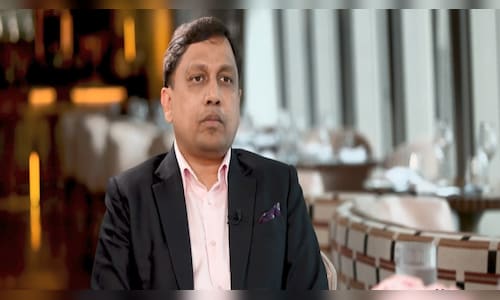

Citing the example of Solar Industries—a company he first identified when its market cap was just ₹1,000 crore—Tibrewal explained how a low-profile, high-conviction investment turned into a massive wealth creator. “They came out with an IPO in 2006, raised ₹80 crore, and over the next several years, just one small dilution of ₹100 crore. Today, the market cap is ₹1.5 lakh crore,” he said.
What stood out to him was the promoter family’s consistent reinvestment into the business and their visible “passion, integrity, and skin in the game”—holding on to nearly 75% of the company. Even during long periods of no revenue, such as their early bets in the defence sector, they continued investing, demonstrating commitment and conviction.
For Tibrewal, the quality of the promoter is the starting point of any investment thesis. “Businesses aren’t linear. There will be slowdowns, external disruptions, internal challenges. But if you trust the promoter and the balance sheet is clean, you ride out that period with them,” he said.
What separates red flags from rough patches? According to Tibrewal, it’s the difference between structural issues and cyclical pain. “You never compromise on governance or cash flow transparency. But if those are intact, and you see that the promoter is more pained than you—as they usually hold a majority stake—you know they’re likely working even harder to turn things around.”
He advised investors to pay close attention to management commentary, especially during tough times. “During quarterly calls, you get a sense—what are they doing to handle the current disruption? If they have the right answers, you stay the course, no matter what the market noise is.”
He pointed to the evolution of Solar Industries as a case study. From a Coal India supplier to an international explosives leader and now a defence player, the company, he said, constantly reinvented itself based on its core strength in chemistry. “They pumped money into defence for nearly a decade before seeing any returns. But when the outcome came, it changed everything.”
He also praised other long-term value creators like Mr. Taparia of Supreme Industries. “At 88, he still brings energy and passion. Look at how the company has grown over two decades.”
Tibrewal summed up his market mantra succinctly: “Get the leader right, get the balance sheet and cash flows right, be patient with your temperament and your own approach—you will make money in the market.”
Watch the accompanying video for more