
The argument is based on a linear calculation that States in the South with lower population will lose representation in the Lok Sabha in comparison to those from other parts, which were tardy in implementing the national population policy of families to have not more than two children.
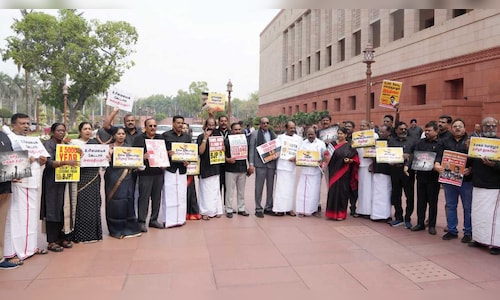
Southern states are apprehensive that the delimitation exercise in 2026, as decided by the 84th Constitution Amendment, would have fewer representatives in Parliament. This would translate into these states losing quantitative weightage in drawing plans, crafting national policies and also in the process of lawmaking.
When the amendment was passed, in February 2001, the Government hoped that the country’s population would stabilise keeping pace with the implementation of family planning programmes in different parts of the country. A similar thought process guided the government in 1975, when Parliament for the first time froze till the year 2000, delimitation undertaken after every decadal census. The idea was to encourage states to implement small family programmes. At the turn of the century, there was an all-around consensus that delimitation should be further frozen and not disincentive states which worked to implement national family planning policy.
Through a series of measures and awareness campaigns the Total Fertility Rate (TFR) of states like Andhra Pradesh and Tamil Nadu fell below the population replacement rate of 2.0. Last December, citing data from the National Family Health Survey-5 (2019-2021), the Health Minister told Parliament that India, as envisaged, achieved TFR of 2.0.
Thirty States/UTs among 36 logged below this figure and only five remained above replacement fertility level. The five included Bihar (3.0), Meghalaya (2.9) Uttar Pradesh (2.4), Jharkhand (2.3) and Manipur (2.2). For instance, among the 30 were Andhra Pradesh and Karnataka (both 1.7) Kerala, Tamil Nadu and Telangana (each 1.8) and the Union Territory of Puducherry (1.5). Punjab and West Bengal (1.6) and Odisha, to name a few.
Stalin takes the lead
After convening an all-party meet in Tamil Nadu, CM Stalin extended invitations to his counterparts in all Southern States, besides, West Bengal, Punjab and former Odisha CM Naveen Patnaik for the Saturday Joint Action Committee meeting. Interpreting the delimitation as an attack on federal principle, CM Stalin is assuming a larger role in mounting a collective fight for the rights of states to national resources as he feels the delimitation would, like some central policies, encroach on states’ autonomy.
Now, here lies a twist in the tale. Compared to the 1999-2001 phase, there is a marked change in the collective effort from southern states. Andhra Pradesh Chief Minister Nara Chandrababu Naidu, an ally of the National Democratic Alliance Government, drew a distance. His argument was population management should not be linked to the political discussions on the issue.
Naidu, once a self-proclaimed ardent promoter of small-family norm, has now begun to advocate that people of Andhra Pradesh, should produce more children in order to ensure the state is not burdened and turns geriatric. The CM cites countries in Europe, China and Japan, as those facing issues as aging societies.
What has made Nadiu adopt a hands-off position on an issue which he championed at the turn of the century even while being an important member of the NDA back then too? Of course, Naidu had the advantage of supporting the Vajpayee government from the outside, taking just the Speakership post for the party, unlike now when his party representative sits in the Cabinet. The CM’s focus appears not to stir the political cauldron making it politically inconvenient for the Modi government.
The BJP leadership in Tamil Nadu has joined the issue with CM Stalin. The Centre sought to assure that the state would not lose out following delimitation. At a meeting in Tamil Nadu last month, Home Minister Amit Shah said the state will not lose any seat in the delimitation and PM Narendra Modi had made it clear that none of the southern states would lose seats after delimitation. A fresh debate has just about begun.
—The author, K V Prasad, is an author and political analyst. The views expressed are personal.
Read his previous articles here
(Edited by : Unnikrishnan)
First Published: Mar 18, 2025 8:30 AM IST