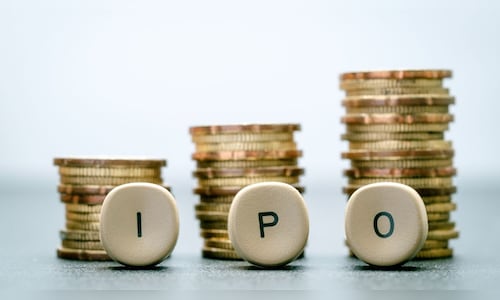

The initial share sale received bids for 1,50,00,111 shares against 1,71,48,335 shares on offer, according to NSE data.
Retail Individual Investors (RIIs) part got subscribed 3.41 times while non-institutional investors portion received 78% subscription. The quota for Qualified Institutional Buyers (QIBs) received 6% subscription.
IndiQube Spaces on Tuesday said it has raised over ₹314 crore from anchor investors.
The ₹700-crore initial public offer (IPO) of the Bengaluru-based firm will conclude on July 25. The price band has been fixed at ₹225 to ₹237 per share.
At the upper end of the price band, the company’s valuation is nearly ₹5,000 crore.
The company is raising ₹650 crore through issuance of fresh issue, and promoters would offload shares worth ₹50 crore under the Offer for Sale (OFS). WestBridge Capital, a key investor in the firm since 2018, is not divesting any stake in the OFS.
IndiQube Spaces proposes to utilise the fresh capital to the tune of ₹462.6 crore towards funding capex for setting up new centres, ₹93 crore for repayment and the rest for general corporate purposes.
The company, which was incorporated in 2015, manages a portfolio of 8.40 million square feet across 115 properties in 15 cities with a total seating capacity of 1,86,719 as of March 2025. This was a growth from 74 centres and 4.94 million sq ft in March 2023.
IndiQube serves 769 clients, out of which 44% are Global Capability Centres. The company follows an enterprise-first strategy, owing to which 63% of its occupied area comes from clients who have leased over 300 seats. Further, 44% of its revenue is generated from multi-centre clients. Its diverse client mix includes Enphase, Myntra, Zerodha, NoBroker, upGrad, Siemens, Juspay, Perfios, Moglix, Ninjacart, Narayana Health and Allegis, to name a few.
ICICI Securities and JM Financial are the book-running lead managers to the issue.
The equity shares are expected to be listed on July 30 on the BSE and NSE.
Also Read: RBI expects India’s strong macroeconomic fundamentals to support demand