
Mission Sudarshan Chakra — What is it?
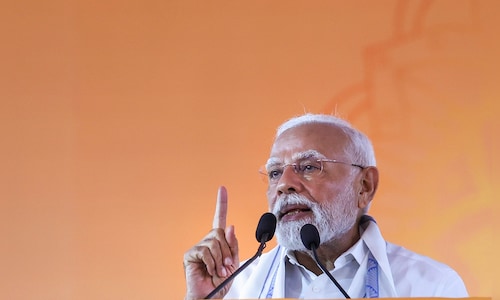
PM Modi announced the launch of Mission Sudarshan Chakra, an indigenous air-defence system aimed at protecting India’s vital military and civilian installations and delivering a decisive response to any enemy threat.
The prime minister did not elaborate on technical details, but experts said the system could be modelled on Israel’s Iron Dome all-weather air-defence shield, known for intercepting missiles with high accuracy, according to a PTI report.
The announcement came days after Pakistan Army chief Field Marshal Asim Munir reportedly hinted at targeting Indian assets along the border, including Reliance Industries Limited’s Jamnagar refinery in Gujarat, in case of a future confrontation.
Cultural inspiration and the goal
PM Modi linked the mission to Lord Krishna’s Sudarshan Chakra, highlighting how India draws inspiration from its cultural and mythological heritage for modern defence innovations. In Indian mythology, the Sudarshan Chakra is a celestial disc-like weapon with sharp edges that spins, often depicted in Lord Krishna’s hands.
The announcement also coincided with Janmashtami celebrations on August 15–16 this year.
The mission will implement multiple layers of protection, combining physical safeguards, modern surveillance, and cybersecurity measures, and is expected to involve joint efforts from India’s leading defence bodies, research institutions, and private-sector innovators.
Push for indigenous jet engines
PM Modi urged Indian innovators and youth to develop fighter jet engines within the country, signalling a move away from dependence on foreign technology.
His remarks gain significance amid ongoing talks between Hindustan Aeronautics Limited (HAL) and US defence major GE Aerospace for local production of the GE-414 jet engine, a key component for the Tejas Mark 2 — the upgraded version of India’s indigenous fighter jet.
The GE deal, signed in 2023, is expected to include technology transfer to India. However, GE Aerospace has previously missed deadlines in supplying jet engines to HAL, delaying Tejas deliveries to the Indian Air Force.
India’s earlier attempt to create a homegrown jet engine — the Kaveri project, approved by the Cabinet Committee on Security in 1989 for the Light Combat Aircraft (LCA) programme — is still incomplete despite an expenditure of ₹2,035 crore over 35 years.
Operation Sindoor and the strength of ‘Make in India’
Referring to Operation Sindoor, launched after the April 22 Pahalgam terror attack, Modi said the operation showcased the strength of Make in India. Indigenous capabilities enabled precision strikes on nine terrorist camps in Pakistan and Pakistan-occupied Kashmir, neutralising over 100 terrorists.
“The enemy saw ‘Make in India’s’ strength during Operation Sindoor,” Modi said, emphasising that national security cannot rely on foreign dependence.
Defence production at record high
India’s defence production touched a record high of ₹1.5 lakh crore in FY25, up 18% from ₹1.27 lakh crore in FY24 and 90% higher than FY20’s ₹79,071 crore.
Defence PSUs and other public-sector undertakings accounted for 77% of the total production, while the private sector’s share rose from 21% in FY24 to 23% in FY25, according to the Ministry of Defence.
Defence stocks to be in focus
The Prime Minister’s Independence Day speech puts defence stocks such as Hindustan Aeronautics Ltd (HAL), Bharat Dynamics, Bharat Electronics Ltd (BEL), Mazagon Dock Shipbuilders, Garden Reach Shipbuilders & Engineers, BEML, Data Patterns, Cochin Shipyard, Solar Industries, Paras Defence and Space Technologies, among others, in focus.