
As the state edges towards what promises to be one of its most unpredictable elections in decades, the narrative is anything but linear.
Four years of DMK rule
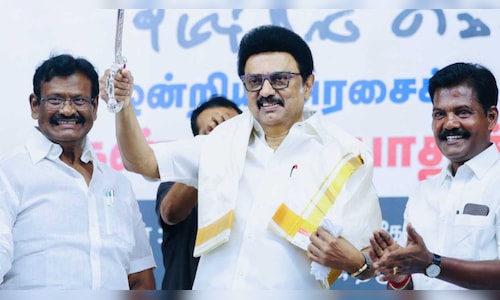
When Chief Minister MK Stalin swept to power in May 2021, it was on the back of a campaign promising welfare, inclusivity, and administrative efficiency. Four years on, the DMK has shown strong economic performance. The state logged a 9.69% GDP growth, ranking among India’s best.
Agriculture expanded steadily at 5.5%, aided by rural investments and irrigation reform. Welfare programmes such as the ₹1,000 monthly assistance to over 1.15 crore women and free bus travel for women have improved household savings.
The government also partnered with the World Bank for women’s employment and blue economy initiatives, while waste-to-energy projects are being rolled out in urban centres.
The achievements have also been eclipsed by controversies.
The Stalin government has faced a barrage of criticism in recent months. The most damaging has been the property tax scam in Madurai, where local DMK functionaries are accused of engineering a ₹150-200 crore fraud by manipulating online property records and extracting bribes from residents and businesses.
Five DMK zonal chairpersons were made to resign, but the opposition is demanding a CBI probe.
The ruling party also faces flak over custodial deaths and concerns over police excesses, with critics blaming a decline in judicial oversight and political pressure on law enforcement.
There was also the accusation of temple funds being redirected to build a university in
Stalin’s Kolathur constituency, a charge the DMK denies.
Forest Minister K Ponmudy was stripped of his deputy general secretary post after a video surfaced in April, showing him making derogatory remarks about women and Hindu religious symbols. The clip went viral, forcing a public apology and giving the opposition fresh ammunition.
The DMK allied with the BJP during the 1999 Lok Sabha and 2001 Assembly elections, and was part of the NDA government at the Centre from 1999 to 2003.
AIADMK-BJP alliance
AIADMK’s Edappadi K. Palaniswami clarified that “there would not be any coalition government… alliance is only for the election,” The Print reports.
CPI leaders warn the BJP is “devouring AIADMK,” as per TOI.
The DMK-led Secular Progressive Alliance has shored up its base, maintaining ties with the Congress, Left parties, and the Dalit-led Viduthalai Chiruthaigal Katchi (VCK).
Other parties in Tamil Nadu
Actor Vijay made his political debut via Tamilaga Vettri Kazhagam (TVK). His team is building extensive booth-level infrastructure, while Vijay has made it clear he won’t ally with the DMK or BJP. Political observers believe he could eat into the vote shares of both, especially among urban youth and first-time voters.
The Pattali Makkal Katchi (PMK) is locked in a leadership tussle between its founder, S Ramadoss, and his son Anbumani Ramadoss.
Former Chief Minister O Panneerselvam (OPS), who has been sidelined within AIADMK, is rumoured to be preparing to float a new political party.
As the state prepares for an exciting contest, one thing is clear: Tamil Nadu’s political story in 2026 won’t be written by two alliances alone.