
Assembly elections will be held in West Bengal, Tamil Nadu, Kerala and Assam, along with the Union Territory of Puducherry. Kerala, Assam and Puducherry will vote on April 9, Tamil Nadu on April 23, while West Bengal will hold polling in two phases on April 23 and April 29. The counting of votes for all five assemblies will take place on May 4.
EC imposes Model Code of Conduct
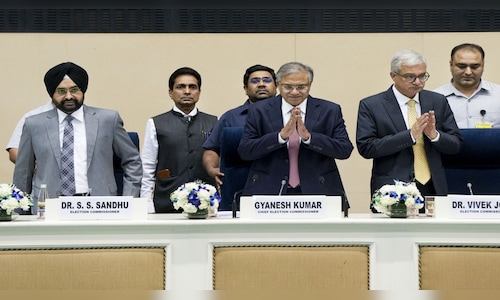
Addressing a press conference in New Delhi, Chief Election Commissioner Gyanesh Kumar clarified that the code became effective immediately after the poll schedule was announced.
While decisions taken before the enforcement remain under the prerogative of the respective governments, all actions from now onwards must comply with the MCC.
To maintain a transparent and peaceful electoral process, the commission has directed nearly 24 enforcement agencies to monitor the polls and prevent inducements and violence, reported ANI.
District Collectors and Superintendents of Police have been instructed to act impartially and strictly uphold the law. Election observers will also be deployed in the states, and authorities have been told to keep a close watch on misinformation and fake content circulating on social media platforms.
The EC has introduced several measures to increase transparency during polling. Presiding officers will update the number of votes cast every two hours so that the voting percentage reported publicly remains accurate.
At the end of polling, the final turnout recorded in Form 17C will be displayed without delay. Booth-level officers will carry identity cards to help voters recognise them easily.
Another step aimed at improving transparency involves the counting process. Postal ballots will be counted before the votes recorded in Electronic Voting Machines (EVMs).
Additionally, all election-related data will be made available through the ECI-Net system within 72 hours of the completion of counting.
In case of any discrepancy between the polling records and EVM counts, slips from the Voter Verifiable Paper Audit Trail (VVPAT) will be counted. Candidates who lose the election can also request verification of EVM and VVPAT records by paying the prescribed fee.
The Commission also highlighted changes to the polling schedule in West Bengal, where elections will now be held in two phases instead of the eight phases seen in previous elections.
According to the EC, the decision was taken after detailed consultations to make the voting process more efficient and convenient.
Polling infrastructure has also been expanded to improve voter access. The Commission has decided that each polling station should have a maximum of 1,200 voters, with additional booths to be created if the number exceeds this limit.
Authorities have also been directed to ensure basic facilities such as drinking water, toilets, waiting areas, proper lighting and ramps for persons with disabilities.
The EC added that key stages of the election process — including nominations, polling and counting — will be recorded.
The Model Code of Conduct now applies to political parties, candidates and governments in the poll-bound regions.
What Is the Model Code of Conduct?
The Model Code of Conduct (MCC) is a collection of regulations established by the Election Commission to govern political parties and candidates during elections to ensure free, fair, and peaceful elections.
The MCC goes into effect soon, once the election timetable is established and remains in place until the electoral process is completed.
What Is not allowed in poll-bound states?
Under the code, political parties are barred from appealing to religion, caste or communal sentiments and must focus criticism on policies, performance, and programmes rather than personal matters.
Bribery, intimidation, campaigning near polling booths and misuse of government machinery are also strictly prohibited.
The Model Code of Conduct strictly prohibits the use of government machinery, funds, or official positions for campaigning.
Ruling governments are barred from announcing new financial grants, infrastructure projects, or ad-hoc appointments that could influence voters, and government facilities like rest houses and transport must be accessible to all parties equally.
Furthermore, parties must inform authorities regarding processions and meetings—obtaining necessary permits for loudspeakers, following pre-decided routes, and avoiding the carrying of harmful objects or the burning of effigies.
All propaganda and liquor distribution are banned near booths and camps must remain simple and free of political symbols.