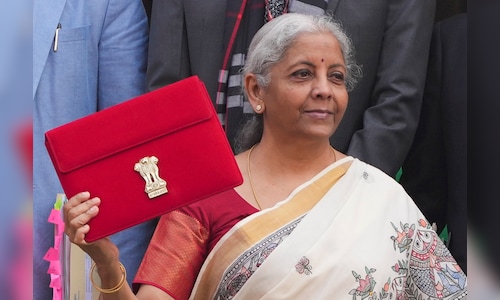

While presenting the Union Budget 2025-26 in Parliament, Sitharaman stated, “Our government has added almost 1.1 lakh undergraduate and postgraduate medical education seats in 10 years, an increase of 130%. In the next year, 10,000 additional seats will be added in medical colleges and hospitals towards the goal of adding 75,000 seats in the next five years.” This marks her eighth consecutive budget presentation in Parliament.
Catch all Updates on Budget 2025-26 here
According to the Ministry of Health and Family Welfare, the number of medical colleges in the country has risen by 8.07% from 706 in 2023-24 to 766 in 2024-25. Over the past decade, the number of medical colleges has nearly doubled, increasing from 387 in 2013-14 to 766 in 2024-25. This includes 423 government-run institutions and 343 private medical colleges.
Similarly, MBBS seats have witnessed a substantial rise, growing by 6.3% from 1,08,940 in 2023-24 to 1,15,812 in 2024-25. Over the last decade, the number of MBBS seats has more than doubled, increasing by 125% from 51,348 in 2013-14 to 1,15,812 in 2024-25.
Postgraduate medical education has also seen a significant expansion, with PG seats rising by 5.92% from 69,024 in 2023-24 to 73,111 in 2024-25. Over the past decade, PG seats have grown by 127%, from 31,185 in 2013-14 to 73,111 in 2024-25.
Union Health Minister JP Nadda, in a review of the first 100 days of the new government in September 2024, had reiterated the government’s commitment to expanding medical education. He emphasised that increasing the number of medical colleges and MBBS and postgraduate seats would help improve the availability of doctors in the healthcare system.
The recent announcement aigns with previous commitments by key government figures. In October 2024, Union Home Minister Amit Shah had revealed the Centre’s plan to add 75,000 medical seats across the country over the next decade to enhance healthcare infrastructure. “We’ve set a target of adding 75,000 medical seats in the next 10 years to meet growing healthcare demands,” Shah said while inaugurating the Hiramani Arogyadham hospital in Adalaj village.
Prime Minister Narendra Modi also emphasised the importance of expanding medical education in his Independence Day address on August 15, 2024. “In the last 10 years, we have increased medical seats to nearly 1 lakh. Around 25,000 youths every year go abroad for medical education, often to countries that surprise me. So we have decided to create 75,000 new seats in the medical field over the next five years,” Modi stated.
The Economic Survey tabled in Parliament on January 31, 2025, highlighted the increasing role of government spending in healthcare. The report noted that the share of government health expenditure in total health spending rose from 29% in FY15 to 48% in FY22. The Total Health Expenditure (THE) in FY22 was estimated at ₹9,04,461 crore, accounting for 3.8% of the GDP and ₹6,602 per capita at current prices. Of this, current health expenditure stood at ₹7,89,760 crore (87.3% of THE), while capital expenditure accounted for ₹1,14,701 crore (12.7%).
With substantial investments in medical education, the government aims to improve access to healthcare, address the shortage of doctors, and reduce dependency on foreign medical education. The expansion is expected to significantly strengthen India’s medical infrastructure in the coming years.