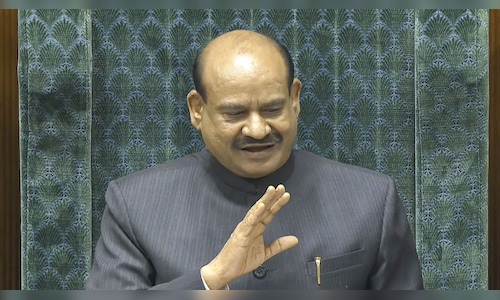

The initiative by the Speaker would allow Indian lawmakers to have direct conversation with their counterparts in other countries and share perspective on various issues of mutual interest. Beyond promoting understanding, these conversations should go a long way in expanding the country’s progress in various fields including trade, technology, culture, social policy and challenges democracies around the world are encountering.
Indications of such a move came during the presiding officers meeting in Mumbai last year, held in the backdrop of the multi-party parliamentary delegations India sent to various countries after Operation Sindoor to convey the country’s point of view
In announcing the setting up of these groups, the idea is these panels can have a structured exchange through dialogues, study visits and joint discussions. These should provide the base to sustain long-term cooperation and compliment the regular work by diplomats.
Among the countries for which groups have been formed include the United States, United Kingdom, European Parliament, Australia, Germany, France, Russia, Japan, Greece, Iran, Brazil, Mexico and South Africa. In the neighbourhood, these include Bhutan, Nepal and Sri Lanka. The groups will be headed by parliamentary leaders of various parties across the political spectrum.
Interestingly, during the tenure of Speaker Somnath Chatterjee, an initiative was launched to have a Parliamentary Friendship Group with the aim and objective to maintain contact on a political, economic, social and cultural level between two countries in order to create favourable conditions for regular inter-parliamentary contact. These groups were to organise talks, exchange and cooperation between two Parliaments. However, not much progress could be made. In 2019, the joint statement by India and the United States of America indicated that efforts would be made for institutional exchange between the Parliament of India and the U.S. Congress. This idea too was quietly shelved.
Historical moves
The Indian Parliamentary Group, formed in 1948 was set up in response to an invitation by the Inter-Parliamentary Union to send a delegation to attend its conference. The Group was also instrumental in organising exchange visits of delegations, undertaking goodwill missions, and corresponding with foreign Parliaments. It also organises addresses to Parliament by visiting Heads of State/ Governments, which began in 1953.
Since the time India achieved freedom in 1947, Indian representatives in the Constituent Assembly — Legislative and Provisional Parliament have made persistent efforts to leave their imprint on the way the country manages its foreign affairs.
The biggest challenge was that before Independence, the country did not have a foreign policy tailored for it. It was the British who conducted it and in the run-up to the making of the Constitution, members of the Constituent Assembly were eager participants in examining foreign policy. Yet members were not drafted to be part of any official delegation the country sent. The job of conducting foreign policy was left to the government and diplomats.
However, over the years MPs were included in delegations to international events like the UN General Assembly and be part of the entourage accompanying the President and the Vice President on official visits.
Elsewhere, participation in seminars, conferences and other such events were not part of parliamentary work.
Challenges
Under the Constitution, Parliament has a role in making laws for any part of the country or as a whole, to implement any treaty, agreement or convention with any country or countries or any decision made at any international conference, association or other body.
The efforts to build an institutional arrangement will require sustained effort on all sides to work on agreed guidelines for bilateral engagement between lawmakers.
Creating bipartisan approach, building a structure, earmarking separate budgetary allocation, and above all how to deal with contentious issues politically by members across the aisle, are some of the areas that will require sustained and diligent work. The presence of members from across the political spectrum with diverse views, would make the task difficult.
Unlike the US, where the Congress has a specified role in shaping foreign policy, in India the framework is provided by the Prime Minister, External Affairs Minister and seasoned diplomats. The Standing Committee concerned has a limited advisory role.
In many countries, Members of Parliament are allowed to hire professional staff including domain experts who assist the lawmakers in crafting policy and advocacy. Such arrangements are not available in India. This will take time to build. Experience from this initiative should form the base for members in India to discover their rhythm and play an important role in playing this role forward.
—The author, K V Prasad is a senior journalist, political observer, and author of “Indian Parliament -Shaping Foreign Policy”. The views are personal.