
Brent crude prices reveresed losses and were above $105 after it had declined 1.8% to $99.37 a barrel post falling 2.7% on Wednesday.
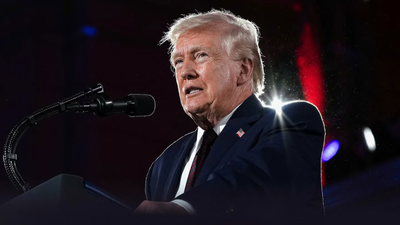
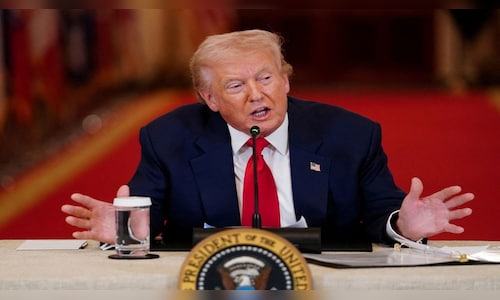
Trump delivered a rare prime-time address to the US at 9 pm (local time).
The US President said it is just one month since the US military operation ‘Epic Fury’ began. Iran’s navy is gone, airforce is in ruins and leaders are dead, he said.
He said he wanted to discuss why the operation is necessary. Trump said US’ objectives are “very simple and clear in Iran” and the core strategic operation in Iran are near completion.
He added that the short-term increase in gas price is solely due to Iran’s attack on its neighbours. He added that the US will “finish the job pretty soon” in Iran.
Trump added that the countries that can’t get fuel should “build up some courage” and “just take the Strait of Hormuz”. He said the countries must take care of the Strait.
He added that the US is going to hit Iran “extremely hard” in the next two to three weeks. Trump added that the US has its eyes on key targets in Iran. If there is no nuclear deal, then US will hit these targets, he added.
Trump concluded by saying the US is on the “cusp of ending Iran’s threat on the world”.
The Iran war has effectively closed the Strait of Hormuz, choking off commodity supplies such as crude, gas and products like diesel to global markets, driving energy prices up and raising fears of an inflation crisis.
Meanwhile, oil futures had declined in recent days, although the international benchmark was still around 40% higher than prior to the war.
The prospect for a resolution has injected optimism into wider markets, but International Energy Agency Executive Director Fatih Birol warned that energy rationing may be coming soon to some countries as the oil supply shock deepens this month. Filling stations in France and Australia have already run dry.
The standoff over Hormuz is the most pressing issue for energy markets. On Monday, Trump said the US will blow up Iranian infrastructure including power plants if the strait doesn’t re-open, but on Tuesday, he called on other nations to wrest control of the waterway. The United Arab Emirates is among Gulf nations calling on the United Nations to authorize force to re-open it.
Iran and Oman will decide the future of the strait, Iran’s Foreign Minister Abbas Araghchi said on Wednesday, state-run Press TV reported. Hormuz won’t be opened based on the “absurd displays” of the US president, state-run IRIB added, citing a statement by the Islamic Revolutionary Guard Corps.
With inputs from Bloomberg