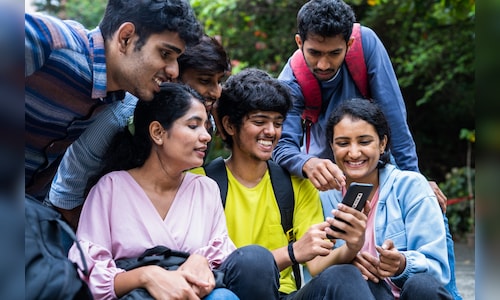

Justice Anup Jairam Bhambhani, who presided over the case, acknowledged the evolving role of technology in education and stressed that an outright ban would be counterproductive.
“This court would observe that much has changed in the past years as regards the use of technology, including for educational and other related purposes. In the opinion of this court therefore, a complete ban on use of smartphones by students attending school is both an undesirable and unworkable approach,” the Court stated.
The bench also noted that smartphones facilitate coordination between students and their parents, contributing to their safety and security.
“Without detracting from the deleterious and harmful effects that arise from the indiscriminate use and misuse of smartphones in school, this court is of the view that smartphones also serve several salutary purposes, including as devices that help with co-ordination between parents and the children, which adds to the safety and security of students attending school,” the Court added.
Case background and Court’s intervention
The case stemmed from a petition filed by a minor student who challenged the restriction on smartphone use at Kendriya Vidyalaya. The student sought directions for schools to permit the use of smartphones. During the proceedings, Kendriya Vidyalaya requested the High Court to frame clear guidelines on the issue.
After considering the arguments, the Court held that students should not be barred from carrying smartphones to school but should be subject to reasonable restrictions and oversight. Accordingly, it outlined a set of guiding principles for schools to regulate smartphone use:
- Where feasible, schools should provide arrangements for students to deposit their smartphones during school hours.
- The use of smartphones should be prohibited in classrooms, school vehicles, and common areas.
- Schools should educate students on responsible online behaviour, digital etiquette, and ethical smartphone usage.
- Students should be made aware that excessive screen time and social media engagement can lead to anxiety, reduced attention spans, and cyberbullying.
- While smartphone use for safety and coordination with parents should be permitted, entertainment and recreational use should be disallowed.
- Schools should formulate their smartphone policies in consultation with parents, educators, and experts, allowing flexibility to cater to their specific needs.
- There should be clear, fair, and enforceable consequences for rule violations, ensuring consistency without excessive harshness.
The Court also recommended that schools impose punishments such as confiscation of smartphones to enforce discipline and regularly review policies to keep up with evolving technological challenges.
Implementation and response
The High Court directed that a copy of its order be sent to the Central Board of Secondary Education (CBSE), the Directorate of Education of the Delhi government, and Kendriya Vidyalaya Sangathan for necessary action.
Advocates Ashu Bidhuri, Swapnam Prakash Singh, Hemant Baisla, Shabana Hussain, and Satyansh Gupta represented the minor student in court. Advocates S Rajappa, R Gowrishankar, and G Dhivyasri appeared for Kendriya Vidyalaya, while Advocates Anuj Tyagi and Akshita Agarwal represented the Delhi Commission for Protection of Child Rights.
ALSO READ: CBSE mulls conducting Class 10 board exams twice a year, starting 2026