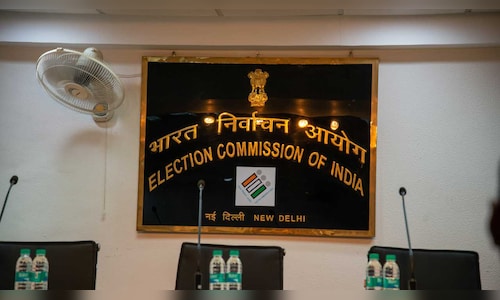

Chief Election Commissioner (CEC) Gyanesh Kumar said the exercise, which begins tomorrow, will cover 12 states including West Bengal, Kerala and Tamil Nadu, all of which go to polls next year. He added that all Chief Electoral Officers and District Electoral Officers have been instructed to meet political parties and brief them on the SIR process within two days. The first phase, completed in Bihar, reportedly ended with “zero appeals.”
However, the claim has met with scepticism from opposition parties.
Congress spokesperson Sujata Paul accused the ECI of favouring the BJP and said that the Bihar revision exercise had disenfranchised nearly 65 lakh voters. “If it was a success, then clearly the government at the Centre is an illegal one because those 65 lakh voters were part of the Lok Sabha rolls as well,” she said. Paul added that the Commission has failed to address concerns over duplicate voters and missing names, and has ignored issues faced by the migratory population.
She further questioned the short appeal window of one month after the draft rolls are published, arguing that the process cannot be “foolproof.” “Democracy thrives on questioning systems to make them stronger. When one political party unconditionally supports an exercise like this, it naturally raises doubts,” she said.
BJP spokesperson Syed Zafar Islam, however, dismissed the allegations as “baseless” and said the opposition’s fears were politically motivated. “The Election Commission is only trying to ensure that the voter list is clean, transparent and accurate. Those who have died or migrated must be removed from the rolls. This initiative is fair to all political parties,” he said.
Islam emphasised that the ECI has invited feedback from all parties and is open to suggestions to improve the process. “The mindset that everything the Election Commission does is wrong must change. It will not act according to political wishes but according to its constitutional mandate,” he added.
Political analyst Sandeep Shastri said the revision was overdue but stressed that the integrity of the process was as important as the outcome. “We must have clean electoral rolls, but the process must inspire confidence. Are we ensuring full coverage, adequate time for appeals, and multiple identity proofs? Greater transparency and participation by multiple stakeholders will build public trust,” he said.
The CEC has maintained that the SIR is aimed at improving the accuracy of electoral rolls across the country, with the next phase to cover more states before the 2026 election cycle.
Below is the excerpt of the discussion.
Q: Sujata Paul, let me get your first reaction. A big point that the CEC made was that when the draft rolls were put out after the SIR exercise was completed in Bihar, there were zero appeals. And even now, there will be an extensive period of appeal that will be allowed, and Election Commission officials will visit every house at least two to three times. Do you feel that the opposition’s concerns around this exercise have now been addressed?
Paul: We’ll have to wait and watch what happens next in these 12 states and Union Territories. But as far as Bihar SIR is concerned, it was a complete failure. And if it was a success, then clearly the government at the Centre is an illegal one, because the 65 lakh voters who were disenfranchised were those whose names were on the voters’ list for the Lok Sabha elections as well.
What’s important is that the results of the SIR in Bihar have shown that there are still serious issues. There have been questions about the five lakh duplicate voters and about one lakh voters without proper names — the kind of “A, B” entries that appear in the list.
Most importantly, when questions were raised about this, the CEC kept saying that it was the responsibility of the BLAs to ensure corrections. But the fact remains that it is the responsibility of the Election Commission to ensure that every single eligible citizen is included in the electoral roll. That is clearly not happening.
When you shift the onus onto the citizens to ensure that his or her name is included, and then shift the burden onto political parties and their electoral officers, it undermines the very mandate of the Election Commission as provided by the Constitution.
They haven’t even mentioned what happens to the migratory population that is not present in Bihar at this time. Suppose some of those people are unable to return to vote — is it fair that their names are excluded simply because no one was present in their homes to verify them?
We all know what happened when this matter went to the Supreme Court and 11 documents were being considered. We now have to wait and see what exactly happens. If you recall, the 2001 census was followed by the 2003 SIR, which was held one year before the Lok Sabha and two years before the Vidhan Sabha elections in Bihar. But where is that data now? Why is the latest census not complete? There are a lot of questions, and we’ll have to see what the Election Commission’s real plan is — because it seems to be working for the BJP.
Q: Zafar Islam, how do you respond to Sujata Paul’s point? The opposition, including DMK’s Stalin, has alleged that the BJP, the NDA, and the Election Commission are trying to disenfranchise voters — especially those unlikely to vote for the BJP. They say this targets minorities and backward classes. How do you respond?
Islam: That is absolutely baseless. There is no truth in the allegations made by the opposition parties.
We welcome this initiative by the Election Commission because it aims to ensure that the voter list is clean, transparent, and free from any anomalies. The intention is to make sure that all data is accurate, and that accuracy can only be achieved through this SIR exercise.
This process will ensure that names of people who have passed away or migrated are removed from the rolls. Many names remain even though those individuals have died or shifted residence. The names of people who now vote in another state must also be removed from their previous location.
Our position is clear: we support any initiative by the Election Commission to clean and update the electoral rolls. It’s fair for every party, not just for one. Everyone will then know that the list is clean and duplication-free.
If the opposition has any concerns, they can and should engage with the Election Commission. The EC is already consulting all political parties and taking their feedback before conducting the exercise. If any party still feels aggrieved, they can approach the courts.
But the idea that the names of deceased or migrated people should remain on the list is absurd. Those names must be removed. That’s why we support this fair, accurate, and transparent initiative.
Q: Sandeep Shastri, how important was it to conduct this exercise? The last time it happened was 21 years ago, in 2004. The CEC said that the Special Intensive Revision has happened eight times in our electoral history. While politicians — especially the opposition — have objections, how significant is this exercise?
Shastri: I would strongly endorse what both my co-panellists have said, because the points they made are important. It is beyond doubt that we must have clean electoral rolls. Those who have passed away must be removed; those who no longer live in an area, or whose names appear in more than one place, must also be deleted. Errors of omission and commission need to be corrected.
While the need for such an exercise is beyond question, what I would emphasise is another “SIR” — sureness, identity, and result. The sureness of the process is crucial. Are we confident that the process will invoke the trust of citizens? Have we ensured that all are covered, that enough time is given, and that remedies are available?
Second, have we ensured that multiple legitimate identity proofs can be used? The Supreme Court earlier said Aadhaar should be accepted, so are we allowing for that flexibility?
Finally, will the result of this exercise actually lead to a cleaner electoral list? So yes, the revision of rolls is important — but the process must inspire confidence and ensure fair results.
Watch accompanying video for entire discussion.