

By Padmakumar Nair
For much of the last century, engineering excellence meant precision within boundaries. We trained engineers to solve well-defined problems within clearly demarcated domains; civil engineers built bridges, electronics engineers designed circuits, and mechanical engineers optimized machines. The world was complicated, but it was largely decomposable.
That world no longer exists. The defining challenges of our time, climate change, energy transitions, digital security, public health, and urban resilience, are not merely technical problems. They are what Horst Rittel and Melvin Webber (1973) famously called “wicked problems.” Problems that are ill-defined, interconnected, and resistant to definitive solutions. Every intervention changes the problem itself. Every solution creates new trade-offs. Such problems cannot be solved through linear thinking. They require systems thinking.
The time has come to move from Components to Connections. At its core, systems thinking is a shift from components to connections.
A traditional engineer asks: How do I optimize this part?
A systems thinker asks: What happens to the whole when I optimize this part?
This distinction is no longer academic; it is deeply consequential. Consider urban mobility. Expanding road capacity may appear to solve congestion, but it often induces more demand, ultimately worsening the problem. Similarly, optimizing an AI model for efficiency may inadvertently amplify bias at scale. A high-performance material may improve product durability while creating long-term environmental harm. In each case, the failure is not technical competence. It is systems blindness, the inability to anticipate how parts interact within a larger whole.
The Limits of Reductionism
Reductionism has been the engine of scientific progress. It allows us to break complex systems into manageable parts. But when applied uncritically to socio-technical systems, it becomes insufficient and at times dangerous. Wicked problems do not lend themselves to neat decomposition. Their boundaries are fluid. Their stakeholders are many. Their consequences are often delayed and unevenly distributed.
A renewable energy solution, for instance, is not just about generation efficiency. It intersects with land use, community acceptance, supply chains, geopolitics, and long-term ecological impact. A purely technical solution, however elegant, is incomplete without understanding these interdependencies. As Herbert Simon observed, we operate under bounded rationality. We simplify reality in order to act. But when our simplifications ignore critical interconnections, we do not merely make errors, but we create systemic risks.
Engineering in an Interdependent World
We are entering an era where engineering decisions are inseparable from their broader consequences. Artificial intelligence does not just automate tasks; it reshapes labor markets, challenges privacy, and raises fundamental questions about accountability. Energy systems are no longer about generation alone; they are about sustainability, equity, and geopolitical stability. Infrastructure is not just about efficiency; it is about resilience in an uncertain climate. In this context, engineering is no longer a purely technical discipline. It is a socio-technical practice.
This is why we frame sustainability through what we call the 6E lens: Energy, Environment, Ethics, Essential Materials, Economics, and Education. No engineering decision can be considered complete unless it is examined across these dimensions. Systems thinking is not an abstract philosophy; it is a practical necessity.
The Centrality of Judgment
If systems thinking is the lens, judgment is the capability. Wicked problems do not have optimal solutions, only better or worse trade-offs. The role of the engineer is no longer limited to computation; it is to navigate competing objectives under uncertainty. In this sense, the future of engineering is deeply human.
We often say, inspired by advances in artificial intelligence, that attention is all you need. But in the human domain, judgment is all you need. Judgment requires intellectual humility; the recognition that no model fully captures reality. It demands interdisciplinary openness; the ability to engage with economics, psychology, ethics, and public policy. And above all, it requires responsibility.
Reimagining Engineering Education
If the engineer of the future must be a systems thinker, then our educational models must change. We cannot continue to train students in silos and expect integration in practice. Three shifts are essential. First, from disciplinary depth alone to interdisciplinary integration. Depth remains necessary, but it is no longer sufficient. Engineers must be able to converse across domains. Second, from problem-solving to problem-framing. In wicked problems, defining the problem is often more important than solving it. Poorly framed problems produce elegant but irrelevant solutions. Third, from assessment of answers to assessment of thinking. In the age of AI, answers are abundant. What is scarce is the ability to ask the right questions, evaluate trade-offs, and exercise judgment.
Doing Big by Doing Small
The transition to systems thinking does not require grand declarations. It can begin with small, deliberate shifts in pedagogy. A design project that integrates environmental and social consequences. A classroom discussion that examines ethical trade-offs in technical decisions. An assessment that rewards reasoning over rote correctness. These are micro-innovations. But meaningful change often emerges not from sweeping reforms, but from the cumulative impact of small, consistent actions; doing big by doing small.
Engineering for Responsibility
The next-generation engineer is not just a builder of systems, but a steward of systems. This requires a fundamental shift; from control to understanding, from optimization to balance, from certainty to humility. Wicked problems will not disappear. In fact, they will define the century ahead. The question is not whether we can engineer solutions. It is whether we can engineer wisely. And wisdom, unlike knowledge, emerges only when we learn to see the whole.
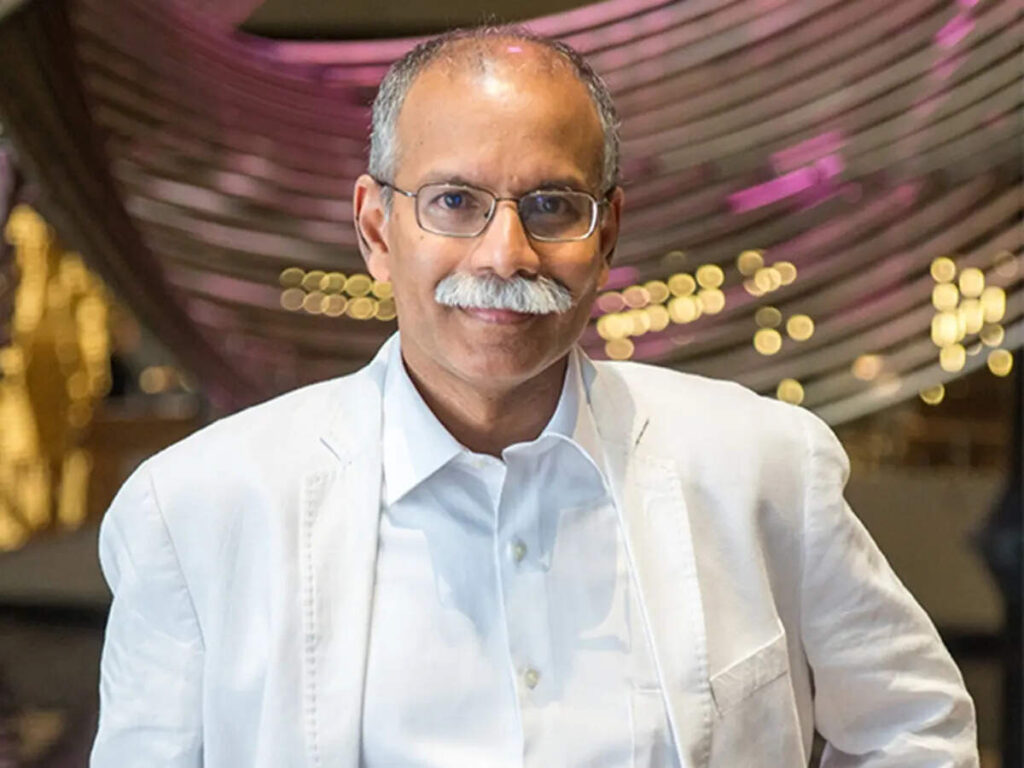
Prof. Padmakumar Nair is the Vice Chancellor of Thapar Institute of Engineering & Technology, with over three decades of experience spanning academia, industry, consulting, and advanced R&D across multiple countries. A dual PhD holder from the University of Twente and University of Tokyo, his work focuses on sustainability, leadership development, nanomaterials, and entrepreneurship. He has authored 55+ research publications with over 2,600 citations and holds international patents. His global career includes roles at organizations such as Shell and PwC, alongside academic leadership positions in the US, Europe, and Asia.
DISCLAIMER: The views expressed are solely of the author and ETEDUCATION does not necessarily subscribe to it. ETEDUCATION will not be responsible for any damage caused to any person or organisation directly or indirectly.