
The idea behind the April verdict, given by Justices JB Pardiwala and R Mahadevan, was that the Governors and the President cannot indefinitely delay their decision on Bills sent for their approval.
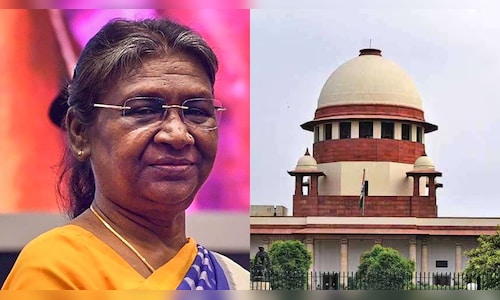
The President of India, Droupadi Murmu, has challenged this ruling and a now, a special Bench of the Supreme Court, comprising Chief Justice of India (CJI) BR Gavai, Justice Surya Kant, Justice Vikram Nath, Justice PS Narasimha and Justice Atul S Chandurkar, is hearing the appeal.
President Murmu has raised 14 constitutional questions under Article 143(1), arguing that the Supreme Court cannot set deadlines where the Constitution is silent and has objected to the doctrine of “deemed assent” introduced in the April 2025 verdict.
The Central government is standing in support of the Presidential reference whereas state governments like Tamil Nadu and Kerala, governed by political rivals of the Bharatiya Janata Party (BJP) at the centre, have challenged the maintainability.
Opposition parties have called the Presidential reference an “appeal in disguise” against the Supreme Court itself and have argued that the judiciary cannot re-review its own decisions under Article 143.
Two questions in front of the Supreme Court
Can the Supreme Court prescribe procedures where Constitution is silent?
Does judicial enforcement of timelines upset the balance between Executive, Legislature, and Judiciary?
Track CNBC-TV18.com for the latest updates as the arguments continue at the Supreme Court of India.
(Edited by : Sriram Iyer)
First Published: Aug 19, 2025 11:11 AM IST