
SC-mandated timelines for Governors on state bills
| Scenario | Governor’s action | Condition | Timeline |
| Withholding assent or reserving the bill for President | Must act on the advice of State Council of Ministers | Action to be taken in line with advice | Within 1 month |
| Withholding assent (against Council’s advice) | Must return the bill with a message | Action taken contrary to Council’s advice | Within 3 months |
| Reserving the bill for President (against Council’s advice) | Must reserve the bill | Action taken contrary to Council’s advice | Within 3 months |
| Reconsidered bill re-passed by Assembly | Must grant assent | After re-passage under first proviso | Forthwith; max 1 month |
The apex court’s decision marks a turning point in the ongoing tussle between several Opposition-ruled states and their respective governors, who are appointed by the Centre. At the centre of the Tamil Nadu confrontation lies a protracted standoff involving pending bills, many of which sought to reduce the governor’s role in the governance of state universities.
What happened
A bench comprising Justices J.B. Pardiwala and R. Mahadevan held that the Tamil Nadu governor’s decision to sit on 10 bills, and later refer them to the President even after the Tamil Nadu Legislative Assembly had re-passed them, was contrary to the Constitution.
The court invoked its extraordinary powers under Article 142 to declare that all 10 bills would be deemed to have received the governor’s assent on the date they were resubmitted after being passed a second time by the Assembly.
Justice Pardiwala noted that the governor had not acted “bona fide” and that the reservation of the ten bills for the President’s consideration after the Assembly had already reconsidered them was contrary to Article 200 of the Constitution. The court further declared that any action subsequently taken by the President on these bills had “no legal validity”.
Understanding Article 200 of the Constitution
Under Article 200 of the Constitution, a governor has three options upon receiving a bill from the state legislature: assent to it, withhold assent, or reserve it for the President’s consideration.
However, the Supreme Court made it clear that this decision must be made at the initial stage itself. A governor cannot reserve a bill for the President after having first withheld assent, especially after the Assembly re-passes it—a move that was deemed a constitutional overreach.
The court rejected the notion of a “pocket veto”—where a governor can sit indefinitely on a bill without taking any action—and stressed that governors must act in accordance with constitutional values, not political expediency. They are not supposed to be obstructions in the legislative process but facilitators of democratic governance.
Also Read: Centre rejects Tamil Nadu’s NEET Bill passed twice by Assembly
The Tamil Nadu state versus governor story
The controversy in Tamil Nadu began between January 2020 and April 2023, when the state’s DMK-led government passed 12 bills and sent them to the governor for assent. Most of these bills related to curbing the governor’s powers in appointing Vice-Chancellors to state universities.
The governor, however, delayed action on these bills, prompting Chief Minister MK Stalin to accuse him of undermining democratic governance.
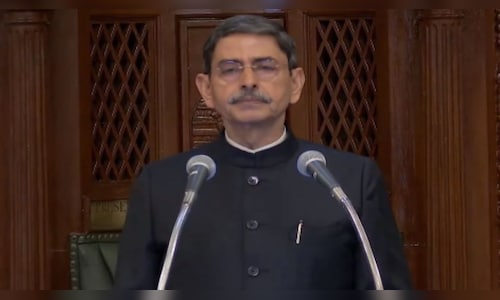
Governor RN Ravi, a former IPS officer and ex-CBI official, took office in Tamil Nadu in 2021. Since then, his relationship with the DMK-led government has remained strained.
In October 2023, the state approached the Supreme Court, accusing the governor of mala fide inaction. Just weeks later, the governor returned 10 bills without substantive explanation and reserved the remaining two for the President.
The Assembly promptly re-passed the returned bills in a special session and sent them back for assent, only for the governor to refer all 10 to the President. The President later assented to one, rejected seven, and left two pending.
The Tamil Nadu government’s petition under Article 32 accused the governor of paralysing governance by delaying not just legislation but also crucial decisions such as prosecution sanctions in corruption cases and approval of state recruitment policies.
Other states on same boat
Several states, including Kerala, Telangana, and Punjab, have also approached the Supreme Court with similar grievances against their governors.
In Kerala, for instance, bills addressing post-COVID public health concerns have reportedly been pending with the governor for over two years.
Telangana has alleged that more than 10 bills, passed as early as September 2022, remain unsigned.
In 2023, the then-Chief Justice of India, D.Y. Chandrachud, warned Punjab’s governor, Banwarilal Purohit, who also previously served as Tamil Nadu governor, that in a parliamentary democracy, real power lies with elected representatives, not gubernatorial appointees.