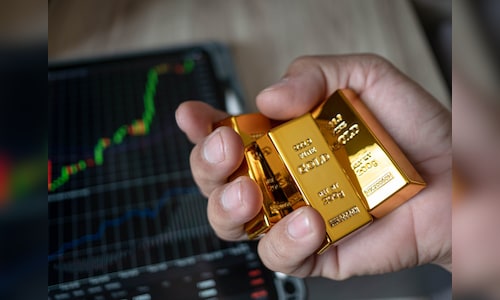

Spot gold slipped 0.1% to $3,232.45 an ounce by 3:29 am GMT, retreating from a lifetime high of $3,245.42 per ounce.
US gold futures, however, rose 0.1% to $3,248.20 per ounce.
In India, 24-carat gold was priced at ₹94,030 per 10 grams, while 22-carat gold stood at ₹86,194 per 10 grams, according to the Indian Bullion Association’s morning data.
“The softer dollar has supported gold, but the tariff exemptions lifted market sentiment and reduced safe-haven appetite,” said Tim Waterer, Chief Market Analyst at KCM Trade.
The White House’s announcement to exclude key tech products from tariffs provided temporary relief.
Still, Trump’s weekend comments signaled that the tariff reprieve may not last long.
This back-and-forth has added to market uncertainty.
Gold surged past $3,200 per ounce on Friday (April 11) as US-China tensions flared. Analysts expect more volatility ahead. Goldman Sachs now sees gold hitting $3,700 per ounce by end-2025, up from its previous forecast of $3,300.
The revision is driven by strong central bank buying and rising ETF inflows.
Meanwhile, traders are pricing in about 80 basis points worth of US rate cuts by late 2025.
Since gold offers no interest, it tends to benefit when rates fall.
In China, gold premiums widened last week as buyers rushed to hedge against trade-related risks.
Indian outlook
Aksha Kamboj, Vice President of the Indian Bullion and Jewellers Association (IBJA), noted that gold has climbed to new peaks in 2025.
She attributed the rally to global economic uncertainty, currency swings, and strong festive and wedding demand in India. Central bank purchases have also played a role.
However, she cautioned that after such a sharp rise, a short-term pullback is possible.
“It is essential that every news from China and the USA is evaluated for its effect on gold prices before making any fresh entry,” she said.
Kamboj recommends a cautious investment approach. Instead of bulk buying, Indian investors may consider staggered purchases or SIP-style investing. While the long-term trend remains bullish, current levels may be too high for lump-sum buying.
–With inputs from Reuters