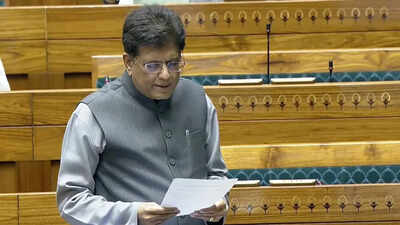


NEW DELHI: The Centre is encouraging government departments and prosecutors to withdraw pending cases involving minor offences to help resolve an estimated 5 crore cases currently pending in courts after the passage of the second Jan Vishwas Bill, commerce and industry minister Piyush Goyal said on Friday.While the amendments across 79 central laws, including some dating back to the pre-Independence period, will apply prospectively, the government is encouraging authorities to review past cases and seek their closure.“The idea is to give an opportunity for people to reform…we hope that these (cases) can be resolved by prosecutors asking courts to close them under the new provisions so that a big relief can be given to past cases,” Goyal said.He said the amendments empower authorities to impose penalties directly, reducing reliance on lengthy court procedures.“I would encourage anybody who is facing a case under any of these sections to approach the prosecuting office. They will be able to follow the new law and eliminate such cases,” he said.The Jan Vishwas Bill decriminalises around 1,000 provisions, replacing fines with penalties in several cases and introducing a graded enforcement mechanism. The Serious offences that cause harm to the public, society, or public property continue to be treated with the full force of the law, Goyal said.Goyal said 12 states have already introduced their own versions of Jan Vishwas bill.
No jail for minor health offences
The bill removes jail terms for a wide range of minor violations in the healthcare sector and replaces them with penalties. It amends provisions of the Drugs and Cosmetics Act, Pharmacy Act, Food Safety and Standards Act, Clinical Establishments (Registration and Regulation) Act and National Commission for Allied and Healthcare Professions Act to remove jail for procedural lapses. For hospitals and clinics, there will be a graded penalty, which will increase for repeated violations. Keeping public health safeguards, the bill seeks to have jail terms for serious offences intact, such as obstructing food safety officials or tampering with seized products.