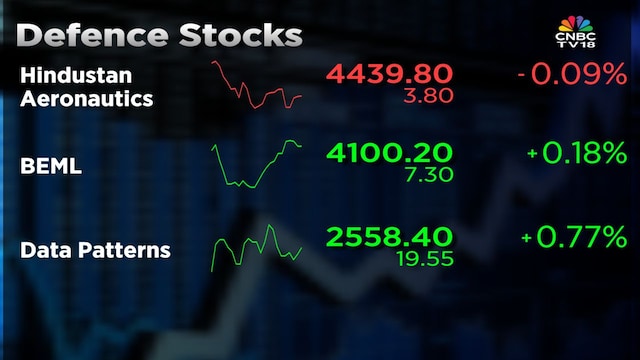

She emphasised that investors should not focus only on public sector undertakings, as private players also hold strong potential to deliver significant returns.
While the overall defence ecosystem is expected to perform well, she noted that the key will be spotting the companies that can emerge as major outliers.

The Defence Ministry announced a 15-year modernisation plan on September 5. The roadmap outlines the future technology and equipment requirements of the armed forces through the 2030s. Though not a direct purchase commitment, it signals the government’s priorities for modernisation, innovation, and self-reliance.
For the Indian Army, the plan includes deploying active protection systems for T-90 tanks, advancing to 4th and 5th generation anti-tank guided missiles, developing air-to-air missile systems for helicopters, and integrating unmanned aerial vehicles with precision-guided missiles.
Gupta noted that the roadmap prioritises next-generation technologies such as AI, hypersonics, and robotics, while balancing indigenisation with global partnerships.
She pointed out that the main challenge lies in execution, as success will depend on turning these ambitions into tangible combat capabilities across land, sea, and air.
According to her, the plan reflects a clear shift from reactive procurement to proactive capability building, and if implemented well, it could significantly benefit the entire defence ecosystem.
She added that the Defence Index provides a strong entry point for long-term investors, as valuations remain low. However, she underlined that this is a multi-year story. With prototypes still in development, investors may need to hold positions for three to five years to realise gains.
Catch all the stock market live updates here