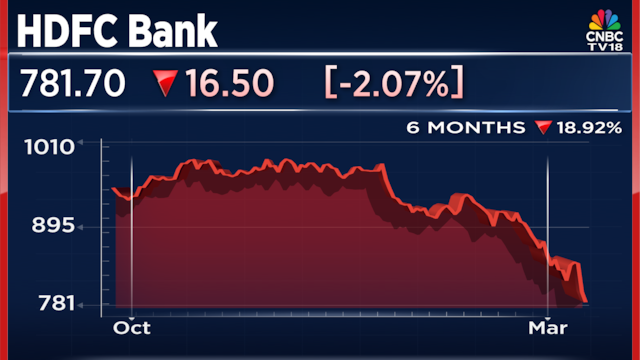

With this, shares of HDFC Bank are down another 4.4% for the week, following up with a 4.7% drop last week. This is also the fourth straight weekly loss for India’s largest private lender, which has now declined in five out of the last six weeks.
On the charts, the stock has slipped below all key moving averages and is well into “oversold” territories. The RSI reading on HDFC Bank is now at 24, whereas a reading below 30 means that the stock is in “oversold” territory.
In technical terminologies, the stock has also entered a “bear market” zone, meaning a drop of 20% or more from its peak. The stock had hit a 52-week high of ₹1,020 on October 23 last year, and the stock has cooled off 22% from those levels.
Brokerage firm Jefferies maintained its “buy” rating on HDFC Bank with a price target of ₹1,240, which implies an upside potential of 59% from current levels. This is also the second-highest price target on the street for HDFC Bank, among the 47 analysts that cover it.
The brokerage said that at 1.7 times financial year 2027 estimated price-to-book, valuations of HDFC Bank appear attractive, according to Jefferies.
Motilal Oswal also maintained its “buy” rating on the stock with a price target of ₹1,100, implying an upside potential of 38% from current levels.
On Thursday, Macquarie had removed the stock from its “marquee buy” list.
45 out of the 47 analysts covering HDFC Bank have a “buy” rating on the stock.
Shares of HDFC Bank are trading 2.2% lower on Friday at ₹781. This is turning out to be the worst quarter for the stock since the January-March period of 2020, during which it had declined 32%. The stock has declined 21% so far in the first three months of the year.