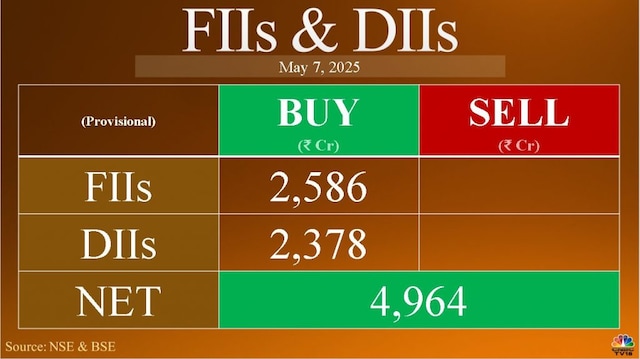

Arora expects Indian market to do well led by foreign portfolio investment (FPI) flows, he highlighted that global asset allocators are reassessing their overweight position in US equities.
While the US has enjoyed years of tech-driven outperformance, that dominance is now under scrutiny, and India’s relatively stable macroeconomic outlook, improving corporate earnings, and political continuity make it a compelling destination.

Arora is particularly bullish on Indian financials, which he sees as the top pick in this rotation. He believes banks and NBFCs are well-placed to benefit from both domestic growth and foreign investor interest. On the other hand, despite weak sentiment in the US tech sector, he avoids Indian IT stocks, citing structural challenges like margin pressure and limited differentiation.
Also Read: Geopolitical jitters offer buying opportunity, say top fund managers
He also stated that while geopolitical tensions—particularly those involving India—have flared recently, they are largely priced in. “India has responded strongly, and Pakistan may have already responded… then we are in the end game already,” he said, pointing to a history of escalation followed by de-escalation, and suggesting that external pressures may now help cool tensions.
Beyond near-term drivers, Arora underscores a long-term opportunity: India’s integration into global supply chains. He calls this a “one-shot opportunity” that, if seized, could fundamentally reshape India’s export profile and manufacturing competitiveness.
Also Read: Inflation, not recession, is the risk: Taimur Baig explains why the market may be getting it wrong
While cautious on the quantum and timing of foreign institutional investor (FII) flows, Arora believes the broad setup is favourable. With US tech exceptionalism being questioned and India offering relative stability and growth, the case for asset rotation into Indian equities remains intact.
For the entire interview, watch the accompanying video
Catch all the latest updates from the stock market here