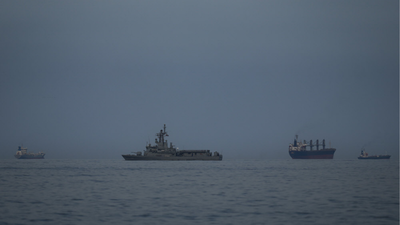


Iran on Thursday allowed Indian-flagged vessels to pass safely through the Strait of Hormuz, even as maritime traffic through the strategic waterway has slowed sharply following the US-Israel strikes on Iran, according to a report in The Economic Times.The move comes amid growing concerns over the safety of global energy supply routes that pass through the narrow strait linking the Persian Gulf with the Gulf of Oman. At the same time, vessels linked to the United States, Europe and Israel continue to face restrictions.Ensuring the safe navigation of tankers through the Strait of Hormuz figured prominently when external affairs minister S Jaishankar spoke with his Iranian counterpart Abbas Araghchi late Tuesday.
The conversation focused on the evolving situation in West Asia and marked their third interaction since the outbreak of the Iran war.Despite allowing Indian-flagged vessels to pass, Iran has warned that ships seeking to transit the Strait of Hormuz must obtain its approval, failing which they could be targeted.Rear Admiral Alireza Tangsiri, commander of the naval arm of Iran’s Islamic Revolutionary Guards Corps (IRGC), said two ships that ignored Iran’s warnings were struck while attempting to cross the strait on Wednesday.“Were the ships assured of safe passage through the Strait of Hormuz? This should be asked of the crews of the vessels Express Rome and Mayuree Naree, who today, trusting in empty promises, ignored the warnings and intended to cross the Strait but were caught,” Tangsiri said in a post on X.“Any vessel intending to pass must obtain permission from Iran,” he added.According to Iranian state media, Tehran has tightened control over maritime traffic through the Strait of Hormuz following the escalation of hostilities with the United States and Israel. Iranian officials have indicated that vessels not serving the interests of Washington or Tel Aviv would be able to transit the strait safely.The Strait of Hormuz remains one of the world’s most critical maritime chokepoints. More than 20 million barrels of crude oil pass through the passage every day, accounting for roughly one-fifth of global oil consumption and nearly a quarter of seaborne oil trade. A significant portion of global liquefied natural gas shipments also moves through the same corridor.Any disruption to shipping through the strait can quickly ripple across global energy markets, affecting fuel prices, shipping routes and supply chains worldwide.Meanwhile, India’s shipping ministry said 28 Indian-flagged vessels are currently operating in the Persian Gulf region. Of these, 24 ships are located west of the Strait of Hormuz carrying 677 Indian seafarers, while four vessels are east of the strait with 101 Indian crew members onboard.Authorities said the situation is being closely monitored, with constant tracking of Indian ships and crew in the region.A 24-hour control room has been operational at the ministry and the Directorate General of Shipping since February 28 to monitor developments and coordinate assistance. Officials said shipping companies, recruitment agencies and Indian missions in the region are in regular contact to ensure the safety of Indian seafarers.Meanwhile, the US Department of Energy said it plans to release 172 million barrels from the Strategic Petroleum Reserve starting next week, as oil markets react to volatility triggered by the conflict and fears of supply disruptions through the Strait of Hormuz.