

India’s stock markets have suffered a sharp setback after geopolitical tensions in the Middle East triggered a wave of global financial uncertainty and according to market data compiled from the Bombay Stock Exchange and the National Stock Exchange of India, the recent sell-off wiped out nearly $240 billion in investor wealth in just a week. The sell-off reflects how quickly international conflicts, Iran vs US-Israel war in this case, can ripple through financial markets, particularly in economies like India that are deeply connected to global trade, energy supply chains and foreign investment flows.Shaktikanta Das, Governor of the Reserve Bank of India, had previously highlighted the risks that global geopolitical tensions pose to financial stability. “Heightened geopolitical tensions and global financial market volatility remain key risks to the economic outlook,” Das had said during the 2024 Monetary Policy Committee press conference held at the Reserve Bank of India headquarters in Mumbai following the RBI’s monetary policy announcement.The sudden erosion of wealth has sent shockwaves across Dalal Street, with benchmark indices falling sharply and investors scrambling to reassess risk. Analysts say the turmoil highlights the fragile balance between global geopolitics and financial markets, where even distant conflicts can send shockwaves across emerging economies.
A sudden shock to investor wealth in India amid Iran vs US-Israel war
The latest market slump has erased billions of dollars from the value of companies listed on Indian exchanges. According to reports, the combined market capitalisation of Indian equities dropped dramatically as investors rushed to sell riskier assets amid escalating geopolitical tensions. The losses are part of a broader trend that has seen investor wealth shrink by tens of trillions of rupees since the conflict began, reflecting widespread panic in financial markets.Nilesh Shah, Managing Director of Kotak Mahindra Asset Management Company, had warned that global uncertainty typically forces investors to reduce exposure to riskier markets. “Markets dislike uncertainty, and geopolitical developments can cause sharp shifts in capital flows as investors reassess risks,” Shah had said during the 2023 Kotak Mutual Fund Annual Investor Conference, where global macroeconomic risks and market outlook were discussed with institutional investors.
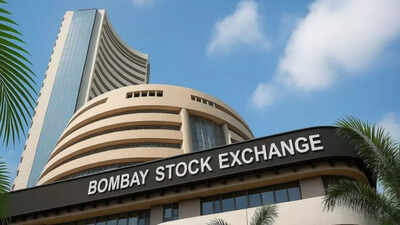
Dalal Street Panic: Middle East War Triggers Massive Sell-Off, $240 Billion Vanishes From Indian Markets
Stock markets typically react quickly to geopolitical instability and the current downturn is no exception. Traders and institutional investors alike have adopted a cautious stance, leading to heavy selling pressure across sectors ranging from banking and automobiles to infrastructure and aviation.
Iran vs US-Israel war sends oil prices soaring
At the heart of the market turbulence is the escalating conflict in West Asia, which has triggered a surge in global oil prices and raised fears of broader economic fallout. The war has already pushed crude oil prices above $100 per barrel, intensifying concerns about inflation, energy security and trade deficits for oil-importing nations like India.Dr Indranil Pan, Chief Economist at Yes Bank, had warned that rising crude oil prices could have macroeconomic consequences for India. “A sustained rise in crude oil prices can widen India’s current account deficit and also create inflationary pressures for the economy,” Pan had said in Yes Bank’s 2023 Macro Economic Outlook presentation for investors and analysts.India is the world’s third-largest importer of crude oil, meaning any sharp rise in energy prices directly impacts its economy. Higher oil costs increase transportation and manufacturing expenses, eventually pushing up consumer prices and weakening economic growth prospects. The situation has been worsened by fears of disruption in the Strait of Hormuz, a strategic shipping route through which a significant share of global oil supply passes. If conflict escalates further and shipping routes are disrupted, energy prices could rise even more sharply.
Sensex and nifty slide amid panic selling during Iran vs US-Israel war
The impact of these developments has been clearly visible on India’s major stock indices. The BSE Sensex and Nifty 50 have both recorded steep declines in recent trading sessions as investors rushed to reduce exposure to riskier assets. At one point, the Sensex plunged more than 1,300 points in a single session, while the Nifty dropped sharply as well.According to Kranthi Bathini, Director of Equity Strategy at WealthMills Securities, geopolitical tensions combined with rising oil prices tend to weigh heavily on investor sentiment. “When crude oil prices rise sharply due to geopolitical tensions, it creates uncertainty about inflation and growth expectations, which typically leads to volatility in equity markets,” Bathini had said in a 2024 WealthMills Securities investor strategy note.
Sensex Falls, Investors Rattled: Middle East Crisis Sparks Massive Market Volatility in India
The sell-off dragged both indices close to one-year lows and pushed them into technical correction territory, meaning they had fallen more than 10% from their recent peaks. For investors, the sudden downturn was a stark reminder of how quickly markets can change direction when geopolitical risks intensify.
Foreign investors in India pull out billions amid Iran vs US-Israel war
Another key driver of the market downturn has been the large-scale withdrawal of foreign investment from Indian equities. Foreign portfolio investors (FPIs) have pulled billions of dollars out of the market in recent weeks as global uncertainty increases. In just the first half of March, foreign investors withdrew around ₹52,704 crore (about $5.7 billion) from Indian stocks.As per Andrew Holland, Chief Executive Officer of Avendus Capital Public Markets Alternate Strategies, global investors often shift capital away from emerging markets during geopolitical crises. “Periods of heightened geopolitical risk typically push investors toward safer assets and developed markets, which can lead to capital outflows from emerging economies,” Holland said during a 2023 Avendus Capital global markets webcast for institutional investors.Such capital outflows can amplify market volatility because foreign institutional investors hold large positions in Indian equities. When they sell shares rapidly, stock prices can fall sharply. The withdrawals have also put pressure on the Indian rupee, which tends to weaken when foreign capital leaves the country.
Broad-based losses across sectors in India amid Iran vs US-Israel war
The market downturn has not been limited to a single sector. Instead, losses have been widespread across the economy, reflecting a broad wave of risk aversion among investors. Financial stocks, which typically dominate Indian indices, have been among the worst hit. Banking shares and financial institutions have fallen sharply as investors worry about the potential impact of slower economic growth.Automobile companies have also suffered steep losses, with the sector recording one of its worst weekly performances in years. Rising fuel costs and economic uncertainty could reduce consumer spending on big-ticket purchases such as vehicles. Infrastructure and aviation stocks have also come under pressure, as investors anticipate higher operating costs linked to rising energy prices.
Global markets also feeling the heat of Iran vs US-Israel war
India’s market turmoil is part of a broader pattern of volatility across global financial markets. Whenever geopolitical conflicts intensify, investors tend to shift money toward safer assets such as gold, US government bonds and the US dollar.
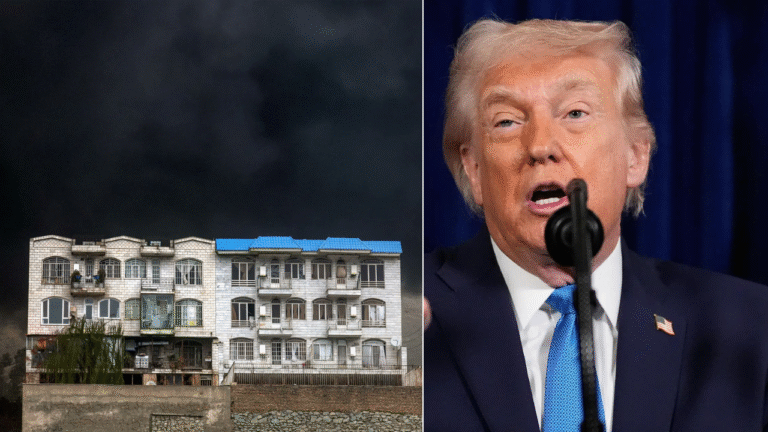
Geopolitical tensions in the Middle East trigger a wave of global financial uncertainty.
Emerging markets, including India, often see capital outflows during such periods. This global “risk-off” sentiment has contributed to the selling pressure in Indian equities.
Domestic investors provide some support amid Iran vs US-Israel war
Despite the sell-off by foreign investors, domestic institutional investors, including mutual funds and insurance companies, have continued to buy stocks in an effort to stabilise the market. However, analysts say domestic buying alone may not be enough to offset heavy foreign outflows if geopolitical tensions persist.Retail investors, who played a major role in India’s market rally in recent years, are also adopting a wait-and-watch approach amid the current volatility.
Experts urge investors to stay calm amid Iran vs US-Israel war
Market regulators and financial experts have urged investors not to panic during the current phase of uncertainty. Historically, geopolitical crises often trigger temporary market corrections rather than long-term structural declines. Analysts say markets usually stabilise once the geopolitical situation becomes clearer.Investors are being advised to focus on long-term fundamentals rather than short-term volatility. The future direction of Indian markets will largely depend on developments in the Middle East conflict and global energy prices. If tensions ease and oil prices stabilise, markets could recover relatively quickly. However, prolonged conflict could lead to sustained volatility, especially if energy supply routes are disrupted or inflation rises sharply.The growing impact of geopolitics on the global economy has often been emphasised by Kristalina Georgieva, Managing Director of the International Monetary Fund. “Geoeconomic fragmentation and geopolitical tensions are creating new uncertainties for the global economy,” Georgieva said during her 2023 opening remarks at the IMF–World Bank Annual Meetings in Marrakech.For now, the $240 billion erosion in market wealth serves as a stark reminder of the interconnected nature of the global economy, where conflicts thousands of kilometres away can rapidly shake financial markets in one of the world’s fastest-growing economies. As investors navigate this uncertain environment, the coming weeks will determine whether the recent sell-off represents a temporary shock or the beginning of a deeper market correction.(Disclaimer: Recommendations and views on the stock market, other asset classes or personal finance management tips given by experts are their own. These opinions do not represent the views of The Times of India)