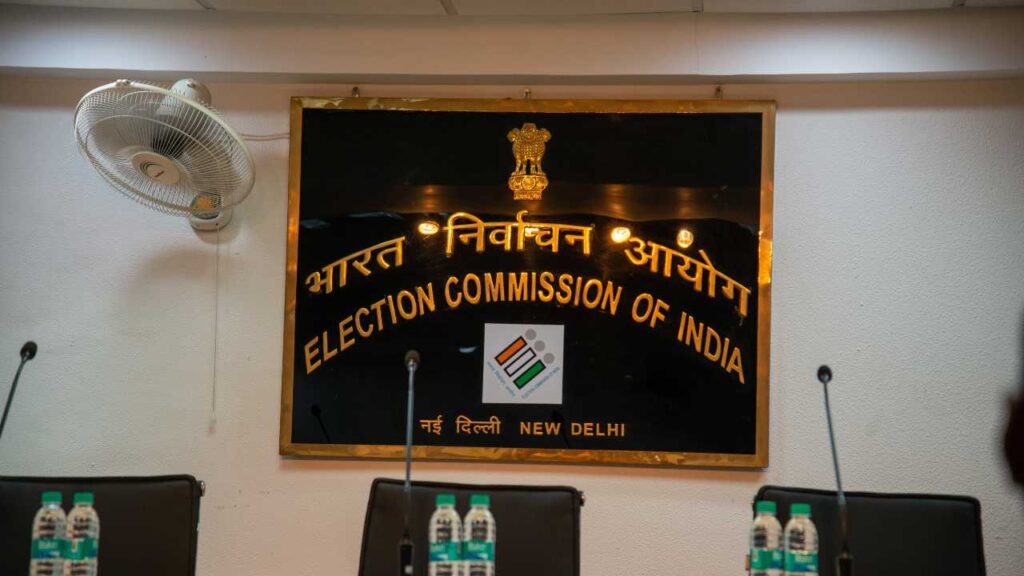

The revision process is likely to start in phases from early November, beginning with the states headed for elections in 2026 and a few others to undergo the exercise. The two-day conference began with the commission assessing the preparation of CEOs from states and union territories for the SIR, The Indian Express reported.
The change may be implemented in stages, starting with Assam, Kerala, Puducherry, Tamil Nadu, and West Bengal – states that will be holding elections next year — and a few others. The final rollout plan will be revealed following the conference.
According to the EC, the commission, which included Chief Election Commissioner Gyanesh Kumar and Election Commissioners Sukhbir Singh Sandhu and Vivek Joshi, also evaluated the status of appointment and training of district, assembly constituency, and booth-level officials.
“The commission assessed the progress made on the directions previously issued to the CEOs to map the current electors with the electors as per the last SIR in the State/UT,” as per the EC.
During the nationwide exercise, the EC may allow electors to submit extracts of their names from the electoral roll of any state’s most recent rigorous revision, not simply the state where they presently reside.
During the Bihar SIR process, electors could only submit extracts from Bihar’s most recent revision.
This means a migrant worker from West Bengal, who is registered as a voter in Mumbai, can remain enrolled in Maharashtra if they can show their name or establish a link with a voter whose name figured in the 2002 West Bengal electoral roll.
After the previous meeting on September 10, Wednesday’s discussion was the commission’s second interaction with CEOs about the SIR in just over a month. At the last meeting, the EC requested that the CEOs trace as many electors as possible to the electoral rolls from the most recent intense review in their respective states to reduce the number of voters who would need to submit papers to prove their eligibility.
The process of mapping existing electors to the last intensive revision has faced hiccups, particularly in urban areas where migration is high.
Earlier on June 24, the EC ordered a Special Intensive Revision of electoral records across the country, starting with Bihar, where Assembly polls were due.
According to the order, all registered electors were needed to fill out enumeration forms to remain on the rolls, while those enrolled after 2003 (the year of Bihar’s most recent comprehensive roll revision) were asked to produce documents verifying their date and/or place of birth. This was done to determine their eligibility as electors, including their citizenship.