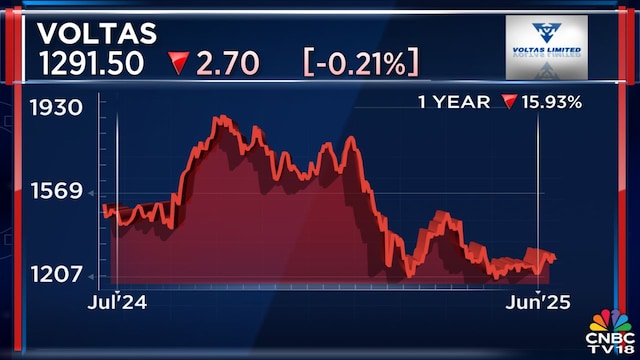

Praveen Sahay, Research Analyst at Prabhudas Lilladher Capital, believes 2025-26 (FY26) will be a muted year for the room AC segment, especially when seen against a strong base in 2024-25 (FY25).
Based on his channel checks and insights from Voltas’ commentary, he notes that the summer has been notably subdued, particularly in North India, where erratic weather patterns and the absence of consistent heatwaves have directly impacted demand.
Voltas, which has a significant presence in the North, saw a 20–25% decline in its room AC sales in April and May. This drop is partly due to unfavourable weather but also reflects a high base effect — last year, the company recorded strong growth of 44%.
Sahay points out that this trend isn’t limited to one company. Channel feedback suggests that the entire industry has been affected by the irregular weather, leading to reduced room AC demand across regions. Brands with greater exposure in northern markets, like Voltas, are facing the brunt of this downturn.

Voltas shares are currently trading at ₹1,290 as of 3:30 pm on the NSE.
Given that summer typically drives the bulk of annual AC volumes, he expects it will be difficult for brands to report growth for the full year. With the industry having grown around 30% last year and Voltas expanding by 36–37%, the current year is likely to be significantly more subdued.
Sahay anticipates a single-digit decline in the room AC segment for the current fiscal. He also points out that the upcoming changes by the Bureau of Energy Efficiency (BEE), expected to take effect from January 1, 2026, are adding pressure on brands to clear existing inventory. This poses another challenge for the industry, particularly in terms of profitability.
With the summer season underperforming and volumes already down, any recovery in sales could still come at the cost of margins in the quarters ahead. Overall, Sahay expects the industry to report muted numbers for the year.
Sahay points out that due to weak market demand, dealers are currently maintaining low inventory levels. This could create challenges for brands when they try to liquidate older stock ahead of the new BEE norms set to take effect from January 1, 2026. These upcoming regulations are expected to raise the cost per unit by around ₹1,000, adding further pressure.
He believes the industry faces difficult quarters ahead, as companies may struggle to implement price hikes in a market already experiencing subdued demand. This combination of higher inventory levels and regulatory cost pressures is likely to weigh on margins going forward.
Watch accompanying video for more