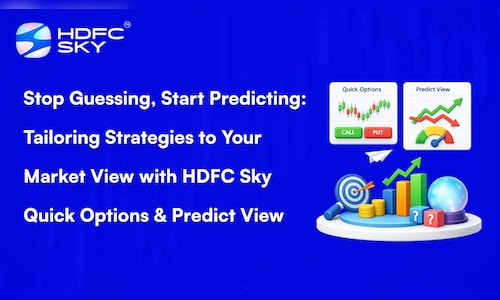

This is where Quick Options and Predict View features of HDFC Sky come into play, providing information to users who can use it for understanding the market. These features use data-driven analysis, as opposed to speculation, for decision-making. This way, traders can make better decisions and increase their probability of success by understanding trends and making strategies based on information.
Understanding Predictive Trading: Why Guessing No ͏Longer Works
Trading on gut instinct may have worked in simpler days, but now markets are dictated by complex data. The prices of stocks are influenced by a variety of factors, including economic indicators, geopolitical events, corporate earnings, and investor sentiment.
Predictive trading changes this dynamic. Rather than reacting to the market movements, traders are now anticipating them. Historical patterns and live data are analysed by predictive tools to identify potential trends. This allows investors to strategise in advance rather than rushing to respond after changes occur.
For instance, if the data shows that a particular stock is going to go up based on strong earnings, a trader can position themselves accordingly. If the signa͏ls indicate a decline, they can take risk-mitigation measures. Predictions do not guarantee success, but enhances the likelihood of making better decisions.
The Role ͏of Options Trading in Market Prediction
Options trading provides a flexible way to anticipate and capitalise on market movements. Unlike traditional stock trading, options allow traders to profit from price movements without owning the underlying asset.
Options ͏come in two main types:
- Call option: This gives the holder the right to buy an asset at a set price, usually when ͏the trader is expecting the price to rise.
- Sell option: This option gives the right to sell the asset at a set price, generally when the trader is expecting a market downturn.
By choosing the appropriate options strategy, traders can align their positions with market predictions. If they are anticipating volatility, they can also use options to hedge risks or speculate on price movements.
However, trading options needs knowledge and accuracy. Without the right insights, it͏ can lead to lo͏s͏ses. This is why tools such as HDFC Sky Quick Options and Predict View are important.
How HDFC Sky Empowers Predictive Trading
HDFC Sky is designed to simplify trading while providing advanced insights. It helps traders make informed decisions instead of relying on guesswork. The platform combines intuitive interfaces with powerful analytical tools, making it accessible for both beginners and experienced investors.
Two features stand out: Quick Options and Predict View.
Quick Options: Simplifying Options Trading
Options trading can feel complicated, especially for newcomers. Quick Options addresses this challenge by streamlining the process. It provides a user-friendly interface where traders can explore options strategies without getting lost in technical details.
With Quick Options, traders can:
- Identify suitable options strategies based on market conditions.
- Execute trades efficiently with minimal complexity.
- Analyse potential outcomes before making decisions.
This feature removes unnecessary barriers, allowing traders to focus on strategy rather than execution challenges.
Predict View: Turning Data into Actionable Insights
Predict View takes predictive trading to the next level. It analyses market data and provides insights into potential price movements. Instead of guessing where the market might go, traders receive data-backed predictions.
Predict View helps investors:
- Understand market trends and potential shifts.
- Evaluate risk and reward before entering trades.
- Align strategies with expected market movements.
For example, if Predict View indicates increased volatility, a trader might choose strategies that benefit from price fluctuations. If it signals stability, they might focus on long-term investments.
This data-driven approach reduces uncertainty and improves decision-making.
Tailoring Strategies to Your Market View
Every trader has a unique perspective on the market. Some prefer aggressive strategies, while others prioritise risk management. Predictive tools allow investors to tailor strategies based on their views.
Let’s break it down:
- Bullish Market View (Expecting Prices to Rise)
If Predict View suggests an upward trend, traders can consider strategies such as:
- Buying call options to benefit from price increases
Buying call options allows traders to profit when prices rise above the strike price. For example, if a stock trades at ₹100 and the strike is ₹110, gains occur once the price exceeds ₹110, amplifying returns with limited capital risk.
- Investing in stocks with strong growth potential
Investing in high-growth stocks targets companies with expanding earnings and market opportunities. For instance, technology firms often grow as innovation drives demand, offering long-term appreciation when fundamentals remain strong and business prospects improve.
- Using options to leverage gains while managing risk
Options provide leverage, meaning small investments can generate larger returns if predictions materialise. For example, instead of buying many shares, a trader may use options to participate in price movements while limiting upfront exposure and risk.
This approach aligns investments with expected market movements.
- Bearish Market View (Expecting Prices to Fall)
If data indicates a potential downturn, traders might:
- Buy put options to profit from price declines
Put options allow traders to gain when prices drop below the strike price. For example, if a stock trades at ₹100 and the strike is ₹90, profits arise when the price falls under ₹90, helping capitalise on downturns.
- Hedge existing positions to minimise losses
Hedging reduces risk by protecting investments against market declines. For instance, a trader holding stocks may use put options to offset potential losses, ensuring portfolio stability even if prices fall and market conditions weaken.
- Shift investments toward more stable assets
Moving funds to stable assets like bonds or defensive stocks reduces volatility. For example, utilities and consumer staples often perform steadily during downturns, helping preserve capital while maintaining moderate growth potential.
- Neutral Market View (Expecting Stability)
When markets appear stable, strategies may focus on:
- Income-generating options strategies
Income strategies like selling covered calls generate premiums while holding assets. For example, a trader owning stocks sells call options and earns income even if prices remain stable, creating returns without relying on price movements.
- Long-term investments with steady returns
Long-term investments focus on companies with consistent performance. For instance, blue-chip stocks often deliver gradual growth and dividends, helping investors build wealth over time with reduced sensitivity to short-term market fluctuations.
- Risk-managed positions that prioritise capital preservation
Risk management limits losses and protects capital. For example, diversifying investments and setting stop-loss levels ensures exposure remains controlled, allowing traders to stay invested while minimising potential downside during uncertain conditions.
Why Predictive Trading Matters in Modern Markets
Markets today move faster than ever. News spreads instantly, and investor sentiment can shift within hours. Traditional trading approaches struggle to keep up with this pace.
Predictive trading offers several advantages:
- Better decision-making: Data-driven insights reduce reliance on guesswork.
- Improved risk management: Traders can anticipate challenges and plan accordingly.
- Strategic flexibility: Investors can adapt strategies based on evolving conditions.
- Increased confidence: Understanding market trends fosters informed choices.
By embracing prediction, traders move from reactive to proactive decision-making.
Getting Started with Predictive Trading on HDFC Sky
If you’re new to predictive trading, starting small is a wise approach. Use Quick Options to explore strategies and Predict View to analyse trends. Begin with manageable investments and gradually expand as you gain experience.
Here are some practical tips:
- Learn the basics of options trading – Understanding concepts like strike prices and expiration dates builds a strong foundation. These ideas help traders evaluate potential outcomes and make informed decisions rather than relying on guesswork.
- Use predictive insights responsibly: Predictions guide strategy but never guarantee results. Treat insights as supportive data and always assess risks before trading. Responsible use of information improves decision-making and reduces unnecessary losses.
- Diversify strategies: Spreading investments across different strategies reduces risk. If one trade underperforms, others may balance potential losses. Diversification helps traders maintain stability and improve long-term financial resilience.
- Monitor market conditions: Markets change due to economic news and investor sentiment. Regular monitoring ensures strategies remain relevant. Adjusting decisions based on fresh data enhances adaptability and supports smarter trading outcomes.
Final Thoughts
Trading is not about predicting the future with absolute certainty. No tool can guarantee success. However, predictive insights significantly improve decision-making. With HDFC Sky Quick Options and Predict View, traders gain valuable data and strategic tools to align strategies with market conditions and reduce guesswork. Informed decisions help manage risk and enhance growth potential. Stop guessing, start predicting. Tailor strategies to your market view. Now.