
The savings are expected to come through multiple avenues, including a planned reduction of around 1,600 jobs from its existing workforce of 12,000. Additionally, the company will focus on increasing output, optimising its product mix, improving the efficiency of its blast furnaces, and ramping up both the production and usage of pellets.
Tata Steel
has maintained that the recent imposition of tariffs by the United States is likely to have a minimal direct impact on its operations. Meanwhile, its UK arm—Tata Steel UK (TSUK)—is projected to achieve cash breakeven by the second quarter of FY26, signalling a turnaround in its financial performance.
Brokerage Commentary and Ratings on Tata Steel share price
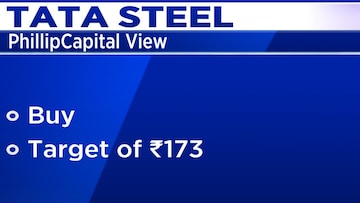
Brokerage houses have reacted positively to these developments, with Philip Capital reiterating a ‘buy’ call on Tata Steel, with a share price target of ₹173, pointing to the potential benefits of the ongoing transformation at TSN.

Equirus Securities has maintained a ‘long’ rating, setting a target price of ₹150 and foresees an improvement in profitability in the European business over the next two years.
Investec has upgraded its rating on the stock from ‘sell’ to ‘hold’, citing stronger operational visibility at TSN. The brokerage has also revised its EBITDA per tonne forecast for TSN to $100/t by FY27, up from its earlier projection of $60/t.
Previously, TSN was expected to generate EBITDA of $40/t in FY26. However, with the new efficiency measures in place, EBITDA per tonne is now projected to rise by $80/t in FY26, followed by an additional increase of $7–8/t in FY27, significantly improving the profitability outlook.
Yet another positive development, according to Investec, is the reduced dependence on fund transfers from Tata Steel India to support the European operations. This improvement in financial independence is expected to provide greater flexibility and stability for the group as a whole.