

Grand phrases have a way of sounding decisive in wartime. “Unconditional surrender” is one of them. It carries the echo of 1945, of emperors capitulating and wars ending cleanly on the deck of a battleship. The phrase has resurfaced in Washington’s demands toward Tehran, but political scientist Francis Fukuyama has met it with skepticism. Among other problems, he notes, it assumes a coherent political order capable of surrender, something that simply does not exist in Iran, and perhaps never did.
The problem with demanding surrender
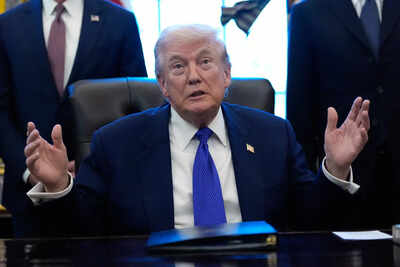
Donald Trump recently demanded Iran’s “UNCONDITIONAL SURRENDER”, promising that the country would later be rebuilt into something “economically bigger, better, and stronger than ever before” under new and “acceptable” leadership. In a high‑profile social media message, he even riffed on his own political brand with the slogan “Make Iran Great Again,” a play on Make America Great Again that projected confidence in military force and the idea of remaking another state in Washington’s image. The declaration raised an obvious question: what exactly is this war meant to achieve?The misplaced confidence behind “unconditional surrender” is easier to understand in light of the administration’s recent success in Venezuela, where a swift operation captured President Nicolás Maduro. It was the kind of clean, decisive outcome that can encourage faith in the simple power of force. When Donald Trump later joined Prime Minister Benjamin Netanyahu in launching strikes on Iran, he seemed to be hoping for something similar, a short campaign ending in quick capitulation. Instead, the war spread across the Middle East, with Iran firing missiles and drones at American allies and bases around the Persian Gulf. It quickly became clear that what remained of the Iranian leadership was not about to surrender, and that the conflict could stretch on for weeks.Which leaves a deeper uncertainty at the heart of the war itself. Is the aim to dismantle Iran’s nuclear programme, topple its leadership, reassure American allies, or somehow reshape Iranian society? Or is it something more ambitious, a civilisational project framed in the language of democracy? Trump has avoided the phrase “regime change”, a political reflex learned from two decades of American misadventures in the Middle East. Yet his own words largely spell it out: talk of “acceptable” new leadership, promises to rebuild Iran after victory, the suggestion that the country’s future begins once its current rulers disappear. Which leaves the war explained through a shifting mix of purposes, nuclear containment one day, liberation the next.And that uncertainty lies at the centre of why the idea of unconditional surrender is so unrealistic.
The misplaced confidence behind “unconditional surrender”
Political scientist Francis Fukuyama, best known forThe End of History and the Last Man, where he argued that liberal democracy had largely won the battle of ideologies, approaches the situation with a characteristically pragmatic lens. In his view, wars like this require clearly limited objectives rather than sweeping declarations. Normally, a careful leader in such circumstances would lower expectations and define an achievable aim, degrading much of Iran’s ability to strike targets with ballistic missiles and drones, for example, creating a plausible moment to declare victory and disengage. Instead, Trump moved in the opposite direction. According to him, the new objective of “unconditional surrender” suddenly raises the goalposts to an almost unreachable height.Fukuyama’s critique begins with something more prosaic: how power actually works inside the Iranian state.The demand for unconditional surrender assumes a government that can instruct its armed forces to lay down their weapons in a single decisive moment, the way Japan’s emperor did at the end of the Second World War. Iran does not function like that. Its security apparatus is split among multiple institutions, the Islamic Revolutionary Guard Corps, the Basij militia and the regular armed forces, each with its own networks and loyalties. After US and Israeli strikes targeted senior commanders, the command structure has become even less coherent.
US and Israel Wipe Out Key Iranian Leaders
In those circumstances, expecting a clean capitulation is wishful thinking. “Iran’s forces — the IRGC, Basij, and the regular military, are highly decentralised,” Fukuyama observed, noting that with leadership disrupted it is not even clear that a single hierarchy remains capable of enforcing surrender. More importantly, surrender would threaten the regime’s survival. Iran’s clerical government maintains power largely through force. Large sections of the population resent it deeply, particularly after violent crackdowns on protest movements. The armed groups that sustain the regime understand that laying down their weapons would likely mean the end of their own political protection. “The IRGC and Basij will not give up their weapons,” Fukuyama wrote, “because they themselves would not survive.”
Protesters burn pictures of Iranian Supreme Leader Ayatollah Ali Khamenei as they march in support of regime change in Iran during a protest in Toronto, on Sunday, Feb. 1, 2026. (Sammy Kogan/The Canadian Press via AP)
In other words, the conflict is unlikely to end through the kind of formal capitulation Washington appears to expect. For the Iranian regime, surrender would not simply mean military defeat; it would almost certainly mean political extinction. The institutions that sustain the state, particularly the Revolutionary Guard and the Basij, understand this clearly. They have every incentive to keep fighting, even in degraded form.
The limits of bombing a country into submission
The final problem, Fukuyama argues, is historical.The belief that air power alone can force a political surrender has repeatedly proven misguided. During the Second World War the United States and Britain flattened German cities in the hope that devastation would break the Nazi government’s will. It did not. The regime collapsed only after Soviet and Allied forces physically occupied the country. A more recent example lies in Gaza. After years of bombardment and large-scale Israeli ground operations, much of the territory’s infrastructure has been destroyed and Hamas severely weakened. Yet the group persists in tunnels and shelters, still capable of obstructing any effort to rebuild Gaza and establish a stable post-conflict government. There are only two cases Fukuyama can identify where bombing by itself produced a decisive political outcome. One was Japan in 1945, when the atomic bombings of Hiroshima and Nagasaki convinced the emperor that further resistance was futile. The other was Serbia during NATO’s 1999 campaign over Kosovo, and even there the bombing campaign triggered domestic unrest that helped topple Slobodan Milošević, followed by a long-term NATO presence on the ground. Iran presents a far more complicated challenge. It is geographically vast, politically resilient and capable of absorbing losses while continuing to retaliate. Even if air strikes destroy much of its visible military infrastructure, missile launchers, drone bases, ammunition depots, thousands of fighters remain capable of continuing the fight. As Fukuyama puts it, “the tens of thousands of individual fighters are still there, and will retain some residual capacity to fight back.”
That means the conflict is unlikely to end with a dramatic capitulation. What is far more likely is a drawn-out cycle of retaliation, with drones and missiles targeting US allies and military facilities across the Gulf.
The uncomfortable return of old debates
To understand the strange logic of the current war, it helps to revisit an argument that hovered over Western foreign policy after the Cold War.When Francis Fukuyama published The End of History and the Last Man in 1992, he was trying to capture the moment that followed the Cold War. Fascism had been defeated and Soviet communism had collapsed. Liberal democracy, tied to capitalism, open markets and representative institutions, appeared to stand alone. Fukuyama suggested the world might be approaching “the end-point of mankind’s ideological evolution and the universalisation of Western liberal democracy as the final form of human government.”
Fukuyama argued after the Cold War that liberal democracy might represent the final stage of ideological evolution.
The phrase was widely misunderstood. Fukuyama was not predicting the end of conflict or political struggle. His claim was narrower: no competing ideology seemed capable of organising modern societies with the same durability. Even if authoritarian systems returned, he believed the long-term trajectory still pointed toward democratic governance becoming more prevalent over time.For policymakers in Washington and Europe, the argument carried practical implications. If democracies rarely fight one another, the proposition at the heart of Democratic Peace Theory, then encouraging the spread of democratic institutions could be framed as both strategy and principle. The logic was appealingly tidy: political liberalisation would encourage economic openness, economic openness would generate prosperity, and prosperous democracies would behave as stable partners rather than adversaries. Expand the liberal order, and the world should gradually become less violent. You can hear the echo of that thinking in the way Donald Trump talks about Iran today. His promise that the country will become “economically bigger, better, and stronger than ever before” once it accepts “acceptable” leadership rests on the same underlying assumption: remove the existing regime, plug the country into global markets, and stability will eventually follow. But that story was never universally accepted. The most influential critic was Samuel P. Huntington, who argued that the world was not converging around liberal democracy at all. The ideological battles of the twentieth century, he believed, were giving way to something older and more stubborn: civilisation. In Huntington’s view, future conflicts would run along cultural and religious lines, Western, Islamic, Sinic, Orthodox, Hindu, as societies defended historical identities rather than adopting a single political model. Another critique arrived from Benjamin Barber, who described the tension between two forces reshaping the world. “McWorld” was his shorthand for the expanding machinery of globalisation: integrated markets, multinational corporations, financial networks and the technological web that ties them together. “Jihad,” in Barber’s formulation, referred not narrowly to islamic militancy but to the backlash such forces provoke, communities rallying around tribe, religion, nation or culture to defend themselves against what they perceive as a homogenising global order. McWorld flattens; Jihad resists. Neither force, Barber argued, necessarily strengthened democracy. Three decades later, those arguments feel less theoretical. China has risen through a hybrid system that mixes one-party political control with the dynamism of market capitalism rather than adopting Western democracy. Russia increasingly defines itself through Orthodox identity and an autocratic state that presents itself as the defender of civilisational continuity. India’s ascent is often narrated through a rediscovery of civilisational identity rather than through imitation of Western political templates. And across parts of the Islamic world, political rhetoric frequently invokes cultural authenticity, historical continuity, and in some cases explicitly theocratic visions of governance, rather than ideological convergence with the liberal order.
Russian President Vladimir Putin speaks with Chinese President Xi Jinping via videoconference at the Kremlin in Moscow, Wednesday, Feb. 4, 2026. (Vyacheslav Prokofyev/Sputnik, Kremlin Pool Photo via AP)
In other words, the world did not converge quite the way many policymakers once expected. It diversified, hardened and, in many places, pushed back. Iran represents one of the clearest examples of that resistance. The Islamic Republic was born in a revolution that cast the United States not merely as a geopolitical rival but as the centre of a global system that sought to remake other societies in its own image while binding them into an economic order designed in Washington, London and New York. Tehran’s leaders have spent decades describing themselves as an “axis of resistance” to precisely that arrangement, rejecting not only American foreign policy but the political and economic model that accompanies it. From Tehran’s perspective, this is not stubbornness. It is the regime’s founding logic. The state was designed to resist absorption into the Western order, not to negotiate the terms of joining it. That is why demands for unconditional surrender misunderstand the terrain almost as thoroughly as they misunderstand the military balance.
Mourners reach out to coffins during a funeral for people killed during the ongoing U.S.–Israeli military campaign in Qom, Iran, Thursday, March 5, 2026. (Seyyed Mehdi Alavi/ISNA via AP)
And there’s another complication Washington rarely admits: its own track record. The United States often wraps its interventions in the language of liberty, freedom, and democracy, noble ideals that sound convincing on paper. In practice, the motives are far less lofty: securing resources, asserting control, and expanding American influence. That control isn’t just about soldiers and bombs. It shows up in sanctions, pressure on trade and energy networks, influence over central banking and financial systems, and the installation of governments willing to play by Washington’s rules. Time and again, the story of promoting democracy has been inseparable from the story of preserving power. The result is a paradox that sits at the centre of the present conflict. Washington believes it is offering Iran a better system, democracy, markets, integration into the global economy. Tehran believes it is being asked to surrender its sovereignty, its ideology and ultimately its identity. And governments built around identity rarely capitulate simply because they are told the alternative will be better.
A slogan without a strategy
If, as Fukuyama expects, the Iranian regime does not capitulate, the United States faces three unappealing options. It could step back after degrading Iran’s military capabilities, leaving a weakened but still dangerous Islamic Republic in place. It could escalate by sending in ground forces, a move fraught with both military and political risks. Or it could expand the bombing campaign to civilian infrastructure, power grids, desalination plants, transportation networks, inflicting suffering on the very population the United States claims it is trying to protect or liberate.None of these paths matches the dramatic clarity suggested by the phrase “unconditional surrender.” As Fukuyama notes, the words may simply have appealed to the president without much thought about how they could backfire.“I’m tempted to believe,” he wrote, “that Trump just liked the sound of the words, without thinking through the ways in which they could come back to haunt him.”More fundamentally, the war was entered without a clear objective: the United States can degrade Iran’s capabilities, he concludes, but it cannot easily end the Islamic Republic, or control what comes after.History, it seems, was never going to end so neatly