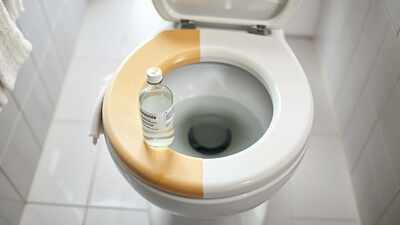


Yellow toilet seats are among those issues that crop up subtly over time. You maintain cleanliness and scrub a little harder when required, but the dingy colour refuses to yield. This can give an otherwise tidy bathroom a somewhat aged appearance. What people are unaware of is the fact that this is not only a superficial problem, but one that extends within the material itself.Most modern toilet seats are made from plastic that contains additives for safety, including flame retardants. Over time, these compounds react with oxygen, moisture, and light. Research such as Photodegradation of brominated flame retardants in polymer systems: Quantum yields, products and influencing factors, published in Polymer Degradation and Stability, explains how this process leads to oxidation and visible yellowing. That is why even frequent cleaning does not fully solve the problem.On top of that, daily application brings another factor into play. Minerals from hard water, along with cleaning agents and oils from your skin, collect on surfaces. According to research cited in Analysis of Calcium Carbonate Scales in Water Distribution Systems and Influence of the Electromagnetic Treatment in the Water Research journal, minerals such as calcium and magnesium build up on household surfaces over time, resulting in a dull appearance.
What makes hydrogen peroxide better than conventional cleaning products
It’s here that hydrogen peroxide comes into play, serving as an unexpectedly powerful option. As opposed to bleach, which may exacerbate plastic yellowing, hydrogen peroxide works on a molecular level to combat the issue.Scientific research on bleaching mechanisms supports this idea. For example, the study Fundamental Reaction Mechanisms of Hydrogen Peroxide Bleaching published in the Japan TAPPI Journal explains how hydrogen peroxide acts as an oxidising agent during bleaching. The research shows that hydrogen peroxide breaks chemical bonds in oxidised compounds, converting colored groups into colourless forms. In other words, hydrogen peroxide does more than just wash a surface; it targets the underlying chemical changes, which helps restore or brighten materials by disrupting the molecules responsible for discolouration.Which is why the results are always easier to obtain with minimal effort. Scrubbing is not needed since it only takes a gradual removal of the yellow tone to restore the natural colour. It is an ideal option for the majority of homeowners.Using it is simple. Start by wiping the seat with mild soap and water to remove any loose dirt. Then apply a three per cent hydrogen peroxide solution using a cloth or sponge. Let it sit for a few hours. If possible, leave the seat exposed to natural light, as light can help speed up the reaction. After that, rinse and dry the surface.More severe stains may require the process to be repeated several times. The results do not happen instantly, but the procedure usually produces better results that are consistently effective compared to traditional approaches.
Simple application and patience yield better results than harsh scrubbing. Avoiding strong cleaners and ensuring good ventilation can prevent future yellowing. Gentle cleaning is key.
Tips to avoid the yellowing of your toilet seat
Repairing a toilet seat is beneficial, but avoiding such problems will definitely make maintenance of your toilet much easier. Some small changes in your daily routine can make a difference.Do not apply strong cleaning products to plastic furniture without care. Scientific research shows that chemical substances from cleaning agents can interact with indoor environments and the materials around them. A research study The impact of surfaces on indoor air chemistry following cooking and cleaning published in Environmental Science: Processes & Impacts explain that volatile compounds and reactive by‑products from cleaning activities can deposit on surfaces and undergo chemical reactions. These indoor chemical processes can gradually change surface chemistry, which, over long periods, may contribute to material deterioration, especially for plastics and coatings that are sensitive to repeated chemical exposure.Also, having an environment with sufficient air circulation is essential. Humidity promotes mineral deposits and material damage. With good air circulation, the levels of humidity are decreased, resulting in slower damage.Frequent cleaning will make a world of difference. The gentle scrubbing will prevent the formation of any buildup in the first place, so you will not have to resort to anything too aggressive.For those who want a more environmentally friendly method, a baking soda paste or even a weak vinegar solution should be able to deal with any surface stains. It works better with initial build-ups as opposed to stains that have set in. For stubborn yellowing, hydrogen peroxide works best.In the end, a yellow toilet seat is not always a sign of poor hygiene. It is often the result of slow chemical changes that happen in everyday conditions. Understanding this makes it easier to choose the right solution.By making use of common materials like hydrogen peroxide, together with a few simple precautions, you will find that you can revitalise the appearance without even needing to replace your seats. Sometimes, the most obvious answer is the best one.