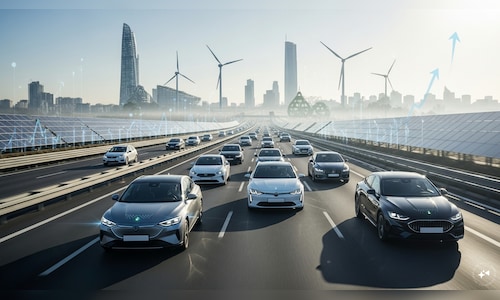

Under the new framework, compliance will be assessed over three-year blocks, such as FY28-30 and FY30-32, instead of on a yearly basis. This approach gives OEMs more flexibility and time to phase in electric vehicle launches.
The proposed norms are set to come into effect from April 1, 2027.
Key changes from the Sept 2025 draft
The incentive for strong hybrids has been reduced, with the super-credit lowered from 2.0x to 1.6x. The earlier proposal of a 3g CO₂/km concession for small cars has also been removed.
At the same time, the draft introduces “derogation technologies”, which can help reduce the required EV mix by 2-4%.
In case of non-compliance, OEMs will have the option to purchase credits from the Bureau of Energy Efficiency, priced at ₹2,500 per g CO₂/km in FY28, rising to ₹4,500 by FY32.
Nomura’s take on CAFE norms
Brokerage firm Nomura believes the new regulations will accelerate EV adoption, while also balancing the interests of various stakeholders.
The brokerage prefers M&M, Hyundai and Sona BLW, citing that the policy direction clearly points towards faster electrification.
It also highlighted that OEMs now have greater flexibility, including the ability to stagger EV launches and use derogation technologies to meet targets.
EV mix estimates to meet FY28 norms
Maruti is expected to require an EV mix of 1-3%, while Hyundai and Tata Motors’ passenger vehicle business may need 4-7%. M&M, given its portfolio, may need a higher EV mix of 13-15%.
Overall, the required EV mix appears achievable for most Indian OEMs. However, global players like Nissan, Renault and Volkswagen may need to accelerate their EV rollout plans.
The EV mix target is expected to increase gradually by 1-2% annually over the next five years.
Stock impact
The changes are seen as positive for M&M and Hyundai, as meeting CAFE norms now appears easier and less of a risk. These companies are also unlikely to significantly alter their product strategies to include hybrids.
On the other hand, Maruti and Toyota may need to reassess the viability of their hybrid strategies, especially after the reduction in hybrid incentives and removal of small car benefits.
Impact on auto ancillaries
An accelerated shift towards electrification is positive for companies like Sona BLW. OEMs are also expected to increasingly adopt technologies such as start-stop systems, six-speed gearboxes and LED lighting, which should drive higher content per vehicle.
This trend is also likely to benefit ancillary players such as Uno Minda, Motherson Sumi Wiring India, Samvardhana Motherson International and Chemplast Sanmar.