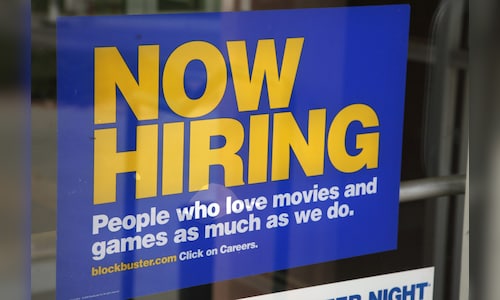

Weekly unemployment filings, a key indicator of layoffs, have remained in a historically low range of roughly 200,000 to 250,000 over the past few years, reflecting a resilient job market. However, several major companies have recently announced workforce reductions, including Morgan Stanley, Block, UPS, and Amazon, suggesting that layoffs are rising in select sectors even as overall claims remain low.
Last week, the Labour Department reported that US employers unexpectedly cut 92,000 jobs in February, a sign that the labour market remains under strain. Economists had expected 60,000 new jobs in February. Revisions also slashed 69,000 jobs from December and January payrolls, nudging the unemployment rate up to 4.4%.
Also Read: US applications for unemployment benefits inch down to 213,000 as layoffs remain stable
The Labour Department also recently reported that job openings fell in December to the lowest level in more than five years. Its January report comes next week. For now, the US job market appears stuck in what economists call a “low-hire, low-fire” state that has kept the unemployment rate historically low, but has left those out of work struggling to find a new job.
Data over the past year has broadly revealed a labour market in which hiring has clearly slowed, hobbled by uncertainty stoked by President Donald Trump’s tariffs and the lingering effects of the high interest rates the Federal Reserve engineered in 2022 and 2023 to tamp down a spike of pandemic-induced inflation. Adding to the uncertainty is the war in Iran, which has sent oil prices 25% higher in less than two weeks.
(Edited by : Jomy Jos Pullokaran)
First Published: Mar 12, 2026 8:02 PM IST