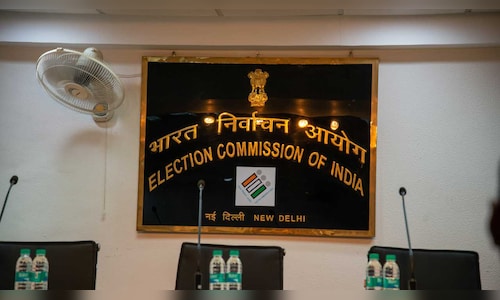

Reports said the Home Ministry has, in a gazette notification, informed the EC about the vice president’s post being vacant following the resignation.
Dhankhar, 74, assumed office in August 2022, and his tenure was till August 2027. He resigned on the first day of the Parliament’s Monsoon Session reportedly after a heated argument with the government. “To prioritise health care and abide by medical advice, I hereby resign as Vice President of India, effective immediately, in accordance with Article 67(a) of the Constitution,” he had said in the letter to the President
dated July 21.
The second-highest constitutional position in the country is now vacant and has to be filled by September 19. The EC said it would hold the polls as soon as possible.
Vice President elections
The election of the vice president is governed by Articles 63 to 71 of the Constitution and the Vice-President (Election) Rules, 1974. Clause 2 of Article 68 of the Constitution says an election to fill a vacancy in the office of the vice president occurring due to his death, resignation or removal, or otherwise, will be held “as soon as possible” after it becomes vacant. The person elected to fill the vacancy will be entitled to hold office “for the full term of five years from the date on which he enters upon his office”.
Under Article 66, the vice president is elected by an ‘electoral college’ consisting solely of members of both Houses of Parliament — Lok Sabha and Rajya Sabha — via a ‘secret ballot’ and a proportional representation system using the single transferable vote.
Key eligibility criteria for a candidate
- Must be a citizen of India.
- At least 35 years old.
- Eligible for election to the Rajya Sabha.
- Not hold any office of profit.