
The yield on the benchmark 10-year sovereign bond went up to nearly 7.13% on Monday before cooling off a bit. The yield is up over 550 basis points in the last one month.
The disruption in energy supply since the start of the war in West Asia, the risk of inflation has risen significantly and growth prospects have dwindled. The phenomenon is described as stagflation in economics.
A rise in inflation would typically force the central bank to increase interest rates, leading to more expensive borrowings over the course of the year. However, according to Kotecha, much of the risk is priced in already.
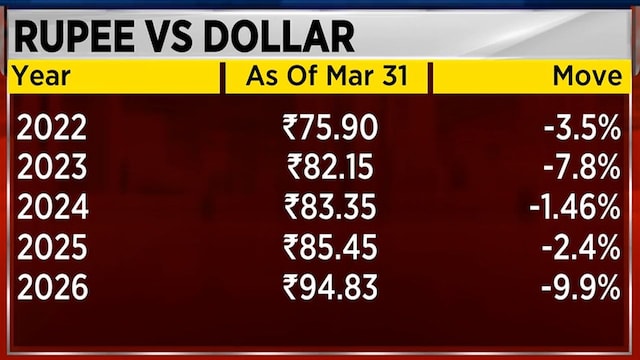
“It does seem like we’re extended in some of these moves in the rates markets,” he said. However, he feels the rupee may fall to 95 against the US dollar by mid-year.

The sharp fall in the value of the rupee, despite RBI intervention, has worsened inflation risks, given that India depends on imports for nearly 90% of its crude oil demand.
The impact of the war on global trade and capital flows may cause a bigger dent on the Indian economy than inflation. “This could be as big a growth shock… as people are perceiving it to be an inflation shock,” Pranjul Bhandari, Chief India Economist at HSBC, said.
However, Bhandari believes that Governor Sanjay Malhotra may avoid sharp changes to the monetary policy stance and instead, he may present multiple scenarios.
Also Read | Economists see RBI holding rates in April policy review on inflation fears amid West Asia crisis
Watch the full discussion here
Catch all the latest updates from the stock market here