
Speaking at the inauguration of the Delhi-Dehradun Economic Corridor, Prime Minister Narendra Modi urged political parties to come together on the issue. He described the Women’s Reservation Bill as the “wish of every sister and daughter in the country.”
#WATCH | Dehradun, Uttarakhand: PM Narendra Modi says, “After decades of waiting, Parliament passed the ‘Nari Shakti Vandan Adhiniyam’. This ensured 33% reservation for women in the Legislative Assembly and Lok Sabha. All parties came forward and supported this important law. Now… pic.twitter.com/TkA89IbhTg
— ANI (@ANI) April 14, 2026
Earlier, former President Pratibha Patil had expressed her support for the proposal in a letter addressed to the Prime Minister, terming it a ‘decisive stride.’ She said the amendment would help strengthen women’s presence in legislative institutions.
“As the first woman President of India, I have long championed the belief that genuine women’s empowerment can only be achieved by providing them equal opportunities to shape decisions that affect the nation,” she noted.
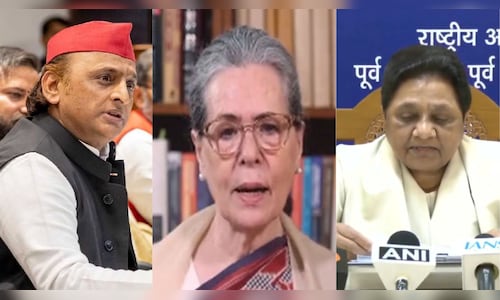
Mayawati expressed support for the bill but repeated her demand for separate quotas within the reservation for women from Scheduled Castes, Scheduled Tribes and Other Backward Classes.
“Our party, BSP, has continuously called for giving 50% reservation to women before too. But no other party wanted to agree to it, neither does it look like they will agree to it. We also thank most revered Babasaheb Bhimrao Ambedkar for giving equal vote to women, just like men got (universal adult franchise),” she said.
#WATCH | Lucknow, Uttar Pradesh: BSP Chief Mayawati says, “Our party welcomes the long-awaited 33% reservation for women in the country’s Parliament, Lok Sabha, and state legislative assemblies, and the rightful and appropriate action to advance it. Although there is a… pic.twitter.com/CYrD1c4JbT
— ANI (@ANI) April 15, 2026
But at the same time, some Opposition leaders raised concerns over the timing and process of the proposal.
Sonia Gandhi raised questions over the timing of the proposal in an op-ed published in The Hindu. She indicated that introducing the amendment at a time when elections are underway in states such as Tamil Nadu and West Bengal is aimed “to derive political advantage and place the Opposition on the defensive.”
She also accused the Prime Minister of being “economical with the truth.”
She maintained that the Opposition supports the idea of reservation but flagged concerns over initiating delimitation before the 2027 census is completed.
Amplifying her views, Rahul Gandhi shared the op-ed on X and wrote, “Any delimitation involving an increase in the strength of the Lok Sabha must be politically, and not just arithmetically equitable.”
Congress Parliamentary Party Chairperson Sonia Gandhi ji writes about how the real concern in the important process of women’s reservation are the risks and inequities posed by a rushed delimitation.
“Any delimitation involving an increase in the strength of the Lok Sabha must be politically, and not just arithmetically equitable.”
Congress Parliamentary Party Chairperson Sonia Gandhi ji writes about how the real concern in the important process of women’s reservation are… pic.twitter.com/y9JARS8bRU
— Rahul Gandhi (@RahulGandhi) April 13, 2026
Akhilesh Yadav, chief of the Samajwadi Party, also raised questions about the timeline. “The question is, why the hurry? What work have you done for the safety and empowerment of women?… Our suggestions should be accepted. How will you create constituencies until the census is done? From which constituency will they contest the elections? Delimitation happens when the census is done,” Yadav said as quoted by ANI
A set of draft Constitution amendment bills shared with Members of Parliament lays out how the Centre plans to roll out women’s reservation and carry out delimitation.
According to NDTV, the proposals include three separate legislations: one to bring in one-third reservation for women in the Lok Sabha and state assemblies, another to establish a delimitation commission for redrawing constituencies and a third to update laws related to Union Territories in line with these changes.
The plan also involves a major revision in the size of the Lok Sabha. The draft amendment suggests fixing the number of seats for states at 815 with an additional provision of up to 35 seats for Union Territories.
Another change relates to how population figures will be considered while allocating seats. The draft allows Parliament to use the latest available census data, which, in this case, would be the figures from the 2011 Census.